




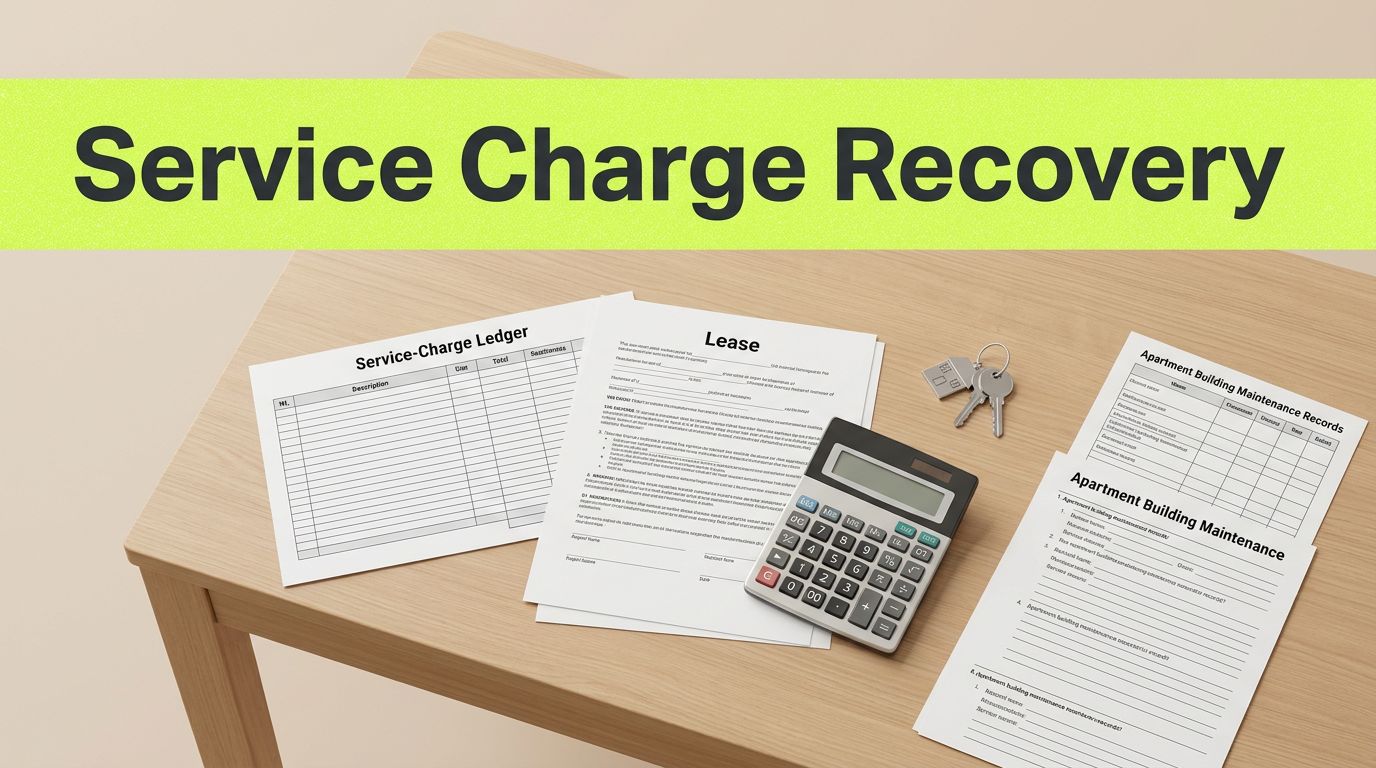
Effective service charge recovery protects essential services, building maintenance, cash flow and the financial health of a block. Service Charge Debt Recovery for Block Managers should also preserve leaseholder confidence, without treating every overdue balance as a hostile leasehold dispute.
Property managers and managing agents need a firm, respectful process based on the lease, accurate demands and clear records. debt recovery can help you find suitable specialist support when internal recovery has reached its limit.
Key Takeaways
- Start with the lease, service charge demands, payment ledger and supporting records before contacting or escalating an account.
- Separate straightforward missed payments from genuine disputes about liability, reasonableness, consultation or missing evidence.
- Use clear, respectful reminders, accurate statements and realistic payment arrangements before considering formal action.
- Keep service charge arrears separate from ground rent arrears, as different rules and recovery routes may apply.
- Refer aged, complex or disputed accounts to a suitable debt recovery agency or solicitor who understands residential leasehold limits.
Service Charge Debt Recovery for Block Managers Without Leasehold Disputes
The practical aim is simple: recover valid service charge arrears promptly whilst avoiding conflict that better information could resolve. Managing agents should distinguish a missed instalment from a challenge to liability or reasonableness.
Disputes often begin with an unclear demand, an old address, missing documents or charges that do not match the lease. Timing also matters. If a leaseholder receives a demand long after costs arose, they may reasonably request evidence before paying.
Your starting point is the lease, followed by service charge accounts, budgets, invoices, payment history and correspondence. For any leasehold property, the lease and statutory rules explain how charges are organised and what can be charged. The Government’s service charge guidance provides further information.
Ground rent arrears are separate from service charge arrears and should not be conflated when assessing liability.
Leaseholders can challenge service charges at the First-tier Tribunal (Property Chamber). In a genuine dispute, a tribunal decision or appeal route to the Upper Tribunal may also become relevant. Routine unpaid balances do not automatically belong in either tribunal, so legal action is not appropriate for every account.
Before starting the legal process, review the demand, supporting evidence and notice requirements. A measured assessment protects the managing agent, the freeholder and the wider block.

### Check the lease and service charge records before you contact the debtor
Before sending a reminder, confirm the named leaseholder and their current correspondence address. Check the service charge period, due date, apportionment method, demand wording, opening balance, payments received and any interest clause.
Review any notice requirements in the lease. Where applicable, the demand should contain the landlord’s name and address and the statutory summary of rights and obligations. If major works form part of the balance, check whether Section 20 consultation under the Landlord and Tenant Act 1985 has been considered.
Correct errors before escalating. Do not describe a challenged sum as an agreed debt, particularly where a leaseholder has requested documents or raised a clear point about liability.

### Separate straightforward arrears from a genuine leasehold dispute
Early triage stops routine collection work becoming unnecessarily adversarial. Categorise the account as an undisputed missed payment, a payment allocation error, a request for evidence, financial hardship or a formal challenge to reasonableness or liability.
Ask focused questions and give a realistic response date. Where part of the balance is accepted, keep that amount separate from the disputed portion. Resolving information gaps can support practical dispute resolution before formal proceedings.
A leaseholder may be able to pay the undisputed sum whilst you investigate the remainder.
A missing payment is not always a refusal to pay. It may show that the demand, ledger or supporting records need attention.
A Clear Recovery Process That Protects Leaseholder Relationships
A consistent process gives leaseholders a fair chance to understand and settle service charge arrears before fees and legal costs rise. Your service charge recovery procedure should set internal deadlines, document each contact and apply the same standards to comparable accounts.
However, consistency does not mean ignoring personal circumstances. If a leaseholder explains a vulnerability or short-term financial difficulty, consider a reasonable adjustment or payment plan where the debt is accepted.
Start with a helpful reminder and a complete statement of account
Your first message should be factual and easy to act on. State the amount due, the dates it covers, payment methods, a named contact and a reasonable deadline. Attach or offer the service charge statement, budget and relevant invoice summary.
A short letter is usually more effective than threats or an administration charge unless authorised by the lease or applicable rules. Invite the leaseholder to identify any query in writing, with enough detail for you to investigate it.
When payment arrives, acknowledge and allocate it accurately. An incorrect ledger can undermine a well-founded arrears case and cause needless further contact.
Use a formal letter before escalation, not pressure tactics
If the reminder produces no payment or response, send a more formal letter before referring the matter. Set out the contractual basis for the charge, current balance, previous contact, response deadline, payment options and the documents available for inspection.
Explain the next likely step if the account remains unpaid, with a clear response deadline as part of a fair legal process, not a threat. Avoid misleading statements about court action, repeated contact that becomes oppressive or public discussion of arrears.
Where the debt is accepted but cannot be paid in full, a written instalment arrangement may recover more than immediate escalation. The Leasehold Advisory Service’s guidance on service charges is a useful reference when a leaseholder seeks information about calculations or a possible challenge.
Keep a recovery file that can withstand scrutiny
Keep a dated file containing:
- The lease, service charge demands, accounts, invoices and any Section 20 papers.
- Letters, emails, call notes, proof of delivery and the payment ledger.
- Details of payment arrangements, missed instalments and the leaseholder’s stated concerns.
- Any ground rent account, kept separate from the service charge ledger.
This audit trail supports accurate service charge recovery and helps resolve misunderstandings quickly. It also gives an agency or solicitor the evidence needed to assess the account without repeating basic fact-finding. If a genuine leasehold dispute progresses beyond the First-tier Tribunal, preserve the relevant documents for any Upper Tribunal consideration. Handle personal data securely and only share information necessary for recovery.
When Should You Use a Debt Recovery Agency or Solicitor?
External support can strengthen service charge recovery when service charge arrears are aged, balances are large or a defaulting leaseholder repeatedly breaks payment promises. Other triggers include an absent owner, several properties held by the same debtor, overseas contact details or a case likely to require court advice.
A responsible debt recovery agency can manage contact, obtain payment proposals and monitor instalments. A solicitor can review the lease and supporting documents before the legal process begins. Neither should treat a residential service charge balance as an ordinary unpaid invoice.
Service Charge Debt Recovery for Block Managers works best when the specialist understands the difference between an enforceable arrears account and a live dispute about the charge itself. The TPI advice note on service charge arrears also stresses that the lease terms shape the available recovery route.
Potential routes may include a Letter Before Action and a court claim. A County Court Judgment may create a money judgment, but neither outcome is automatic or guaranteed. Depending on the circumstances, enforcement options may follow. Forfeiture of the lease and possession proceedings are specialist remedies with strict legal requirements, not routine debt collection steps.
A dispute about liability, consultation or the reasonableness of a charge may follow a tribunal route. The First-tier Tribunal may consider the challenge, with a possible appeal to the Upper Tribunal. Complex questions should be referred to a property litigation specialist rather than treated as simple non-payment. The legal process must distinguish disputed liability from an undisputed balance.
Choose support that understands property debts and leasehold limits
Ask about experience with residential service charges, UK leasehold procedure and service charge recovery. Suitable providers should also understand complaint handling, secure data practices and communication standards. This may include support for landlords and RMC, RTM companies and other residential ownership structures.
You should ask how fees are charged, whether they may be recoverable under the lease and when the provider would recommend legal action. The lease controls the available remedy for a leasehold property, so a solicitor should check the documents before escalation.
A suitable provider should pause where liability is genuinely disputed. A referral service can match you with a specialist based on the debt’s value, age, location, documents and complexity, without requiring you to appoint the introduced provider.
Understand costs and risks before legal escalation
Agency fees, solicitor fees, court fees, legal costs and enforcement expenses can all arise. Yet you cannot automatically add them to a leaseholder’s account. The lease wording, court or tribunal decision and applicable rules may limit what you recover.
Ground rent arrears are a separate debt from service charges, and the recovery rules may differ. Review the evidence and likely return before issuing a claim.
An invalid demand, weak records, poor consultation, an incorrect balance or an aggressive approach can turn a recoverable account into an expensive dispute. The legal process should remain proportionate, evidence-led and focused on the correct remedy.
Prevent service charge arrears before they start
Clear budgets, timely demands and accurate ledgers reduce confusion before service charge arrears affect cash flow. Prompt payment also supports essential building maintenance. Leaseholders are more likely to pay promptly when they understand the charges and can receive a sensible answer to queries.
Make payment and communication simple from the start
Send demands on time and explain how the balance was calculated in plain language. Offer reliable payment methods, issue reminders before instalment dates and confirm payments without delay.
Give leaseholders a named contact for queries. Early updates about planned works, revised budgets or likely increases can reduce surprise and resistance.
Review arrears trends and improve your building’s process
Review aged-debt reports, recurring causes of non-payment, failed payment plans and accounts needing corrected statements. Report ground rent arrears separately, rather than combining different types of debt.
Managing agents should use these findings to improve templates, staff training, payment reminders, record keeping and query handling. This can make credit control more consistent across the building.
Set a written escalation policy with clear stages, response times and approval points. Prevention and early intervention should form part of a consistent service charge recovery system. Leave room to investigate credible disputes fairly rather than pushing every account through the same sequence.
Frequently Asked Questions
Can a block manager recover service charge arrears without starting a leasehold dispute?
Yes. Most overdue balances can be addressed through accurate demands, clear reminders, supporting documents and an agreed payment arrangement. Formal legal action should be reserved for cases where the debt is valid, documented and remains unpaid.
What should be checked before recovering service charge arrears?
Check the lease, named leaseholder, correspondence address, demand wording, due date, apportionment, payment history and any applicable notice requirements. You should also review supporting invoices, accounts and Section 20 consultation records where major works are involved.
What if a leaseholder disputes the service charge?
Pause the relevant escalation and identify whether the dispute concerns liability, reasonableness, consultation or missing information. Keep any accepted amount separate, provide relevant documents and consider specialist advice if the issue may proceed to the First-tier Tribunal.
Can recovery costs be added to the leaseholder’s account?
Not automatically. The lease, applicable rules and any court or tribunal decision determine whether agency fees, solicitor fees, court fees or enforcement costs are recoverable.
When should a block manager use a debt recovery agency or solicitor?
External support may be appropriate where arrears are aged, substantial, repeatedly unpaid or involve an absent or overseas leaseholder. Choose a provider experienced in residential service charges and ensure the lease and evidence are reviewed before legal escalation.
Keep Recovery Firm, Fair and Evidence-Led
Start with the lease and supporting records, then communicate clearly and separate genuine disputes from simple non-payment. This service charge recovery approach gives you a stronger basis for repayment plans, agency referral or legal advice when needed.
Respectful recovery is not weak recovery. Keep ground rent arrears separate from service charge arrears; they are not interchangeable. Reserve formal remedies for cases where the evidence supports escalation and a money judgment is realistically recoverable. It protects building services, cash flow and long-term leaseholder relationships whilst keeping your position ready for scrutiny.