

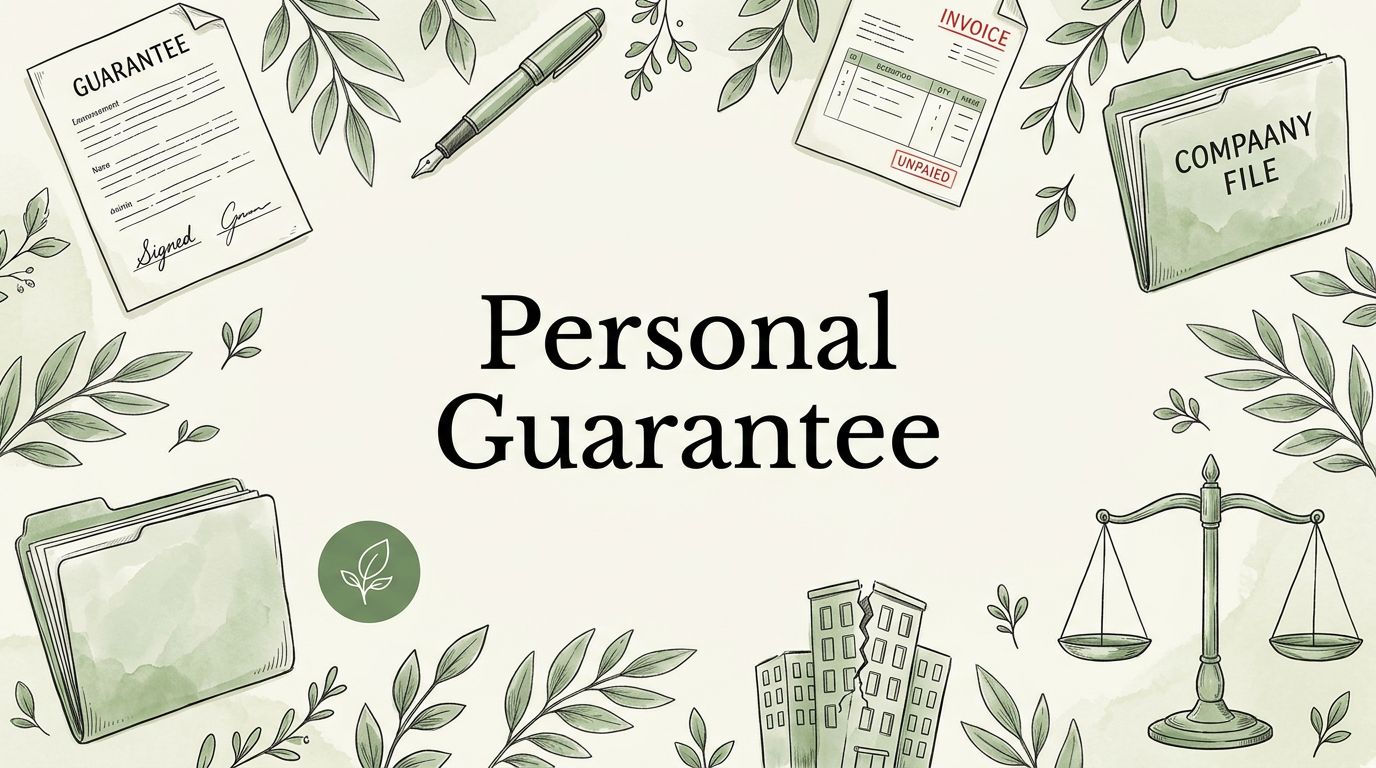
A company’s collapse doesn’t always end your chance of recovering an unpaid invoice. A company director, shareholder, or another individual may have signed a personal guarantee, creating personal liability and a separate route to payment beyond the company’s remaining assets.
Your outcome depends on the document’s wording, your evidence, the stage of company insolvency, and the law applying to the agreement. An enforceable guarantee is valuable, but it doesn’t automatically order payment. Start by identifying exactly what the guarantee requires the guarantor to do.
Key Takeaways
- A valid personal guarantee can create a separate route to recover an unpaid company debt from the guarantor after a limited company collapses.
- Check the guarantee’s wording, signature, scope, limits, notice requirements, expiry date, and treatment of interest and costs before demanding payment.
- Submit a claim in the company insolvency and reconcile any payments or dividends, because you cannot recover the same debt twice.
- Preserve a complete evidence file and follow the guarantee’s demand process carefully, especially where the guarantor disputes liability.
- Compare negotiation, commercial collection, and court action with the guarantor’s ability to pay before incurring enforcement costs.
Personal Guarantee: Enforcing Recovery When a Limited Company Collapses
A personal guarantee is a separate promise to pay a business debt if the company fails to pay. The limited company remains your primary customer under the original contract, and the company remains the corporate debtor. However, the guarantor may become liable under a second agreement.
This matters because limited liability normally separates a company’s debts from the personal finances of its owners. A personal guarantee can bridge that separation for a corporate debt. As this explanation of director personal guarantees notes, the agreement may create personal liability when the company cannot pay.
The guarantor might be a company director, owner, parent-company representative, or another person with a financial interest in the business. Multiple guarantors have joint and several liability only where the wording supports it.
The guarantee may cover one invoice, a credit account, a commercial lease, a supply contract, a loan facility, or asset finance. It may also cover all future debts up to a stated limit. Some agreements instead provide for an unlimited personal guarantee, but the wording and applicable law still control the recoverable amount.
Liquidation proceedings, administration, restructuring, or dissolution don’t automatically cancel the guarantee. Still, check whether the document is written, signed, dated, and supported by clear payment terms. Some jurisdictions also impose execution or witnessing rules.
### What the Guarantee Must Say Before You Rely on It
Read the guarantee alongside the credit application, account terms, and underlying contract. You need to know the debt covered, maximum liability, interest rate, recoverable costs, notice requirements, and expiry date.
A continuing guarantee may cover later orders on the account. A transaction-specific guarantee may cover only one purchase or invoice. The distinction can decide whether your current balance is collectible.
Changes can also create risk. If you extended credit, changed payment terms, released security, or agreed to a new settlement, the guarantee may limit your rights. Missing signatures, unclear wording, or a signatory who lacked authority can also prompt a dispute. Before issuing a formal demand, obtain independent legal advice if the guarantor contests liability.
How Company Insolvency Affects Your Claim
When company insolvency begins, submit your claim to the appointed insolvency practitioner by the stated deadline. Your claim against the company and your claim under the guarantee are connected, but they are not identical.
Company assets belong to the insolvent estate. The guarantor’s home, income, savings, and personal assets are separate, subject to applicable exemptions and other claims. You can’t recover the same debt twice, yet you may pursue the available routes until the balance is paid.
Keep the insolvency notices, proof-of-debt correspondence, and dividend updates. They help you calculate the remaining balance and avoid demands that overstate what is still owed.
How to Enforce a Personal Guarantee After Company Insolvency
Begin with the documents, not a demand letter. Reconcile the underlying business debt, including unpaid principal, credits, returned goods, interest, and payments or dividends received through the insolvency process. Ask the insolvency practitioner to confirm any distributions. Then check the applicable limitation period before time runs out.
Verify the signed personal guarantee, the underlying agreement, and the guarantor’s obligations before sending a demand. Your written demand should identify the guarantee, outstanding amount, payment deadline, interest claimed, and payment method. Keep the tone firm and factual. Don’t make threats, contact unrelated people, harass the guarantor, or imply powers you don’t have.
If you need help assessing the debt’s value, age, documentation, location, and level of dispute, Commercial Debt Recovery provides information about suitable commercial debt recovery options.
Build the Evidence File Before You Demand Payment
A well-organised file makes it easier to assess the claim and respond to objections. It also gives a collection agency or solicitor a faster starting point when reviewing the personal guarantee.
Gather:
- The signed guarantee, credit application, account terms, and underlying contract.
- Invoices, purchase orders, delivery records, account statements, and payment history.
- Emails discussing the debt, requests for time to pay, and any admission of liability.
- Identity and company-role checks for the guarantor, plus insolvency notices and proof-of-debt records.
- Copies of every notice you sent and a record of all calls, emails, and payments.

Don’t alter documents or rely on memory for a verbal conversation. Record the date, time, participants, and a short factual summary after each contact.
Choose Between Negotiation, Collection, and Court Action
Consider the available creditor enforcement options in order of cost, speed, and likely recovery. A payment plan may suit a guarantor who accepts liability but is experiencing financial difficulty. Set it out in writing, including dates, payment amounts, interest treatment, and what happens after a missed instalment.
A settlement negotiation may involve a prompt lump sum or an agreed payment plan. Before accepting less than the full amount, check whether the release gives up claims against the guarantor, co-guarantors, or security. Confirm how the remaining balance will be treated.
Commercial collection can apply measured pressure through clear correspondence and persistent follow-up. A statutory demand is a formal insolvency step, not simply another name for a collection letter. Check the legal basis and statutory requirements before issuing one. If the guarantee is disputed, or a statutory demand is proposed, obtain independent legal advice from a solicitor or another suitably qualified adviser.
Court action should follow a practical assessment of the guarantor’s ability to pay. Legal proceedings may result in a county court judgment, but a judgment does not guarantee payment. A charging order may be considered after an appropriate judgment if the guarantor owns relevant property, subject to legal requirements and proportionality. Bankruptcy proceedings may affect recoverability, so don’t threaten or start them without checking the statutory conditions and available assets. Compare likely recovery with the cost of legal proceedings before proceeding.
A strong guarantee does not make court action proportionate. Your expected recovery matters as much as the legal claim.
Protect Your Recovery Claim From Common Mistakes
Avoid accepting a replacement promise to pay without checking whether it changes or releases the original personal guarantee. An unlimited personal guarantee is not necessarily unlimited in every practical respect. The document and applicable law still govern interest, costs, and enforcement.
Before varying the debt, extending deadlines, or releasing another liable party, obtain independent legal advice. These steps may affect your rights under the original agreement.
Before spending heavily, check what you can lawfully learn about the guarantor’s income, personal assets, existing judgments, and other creditors. An enforceable guarantee has more practical value when the guarantor has the means to honour it. Financial difficulty may still limit recovery.
Use this short review before escalation:
- Confirm the personal guarantee’s scope, signature, limits, notice rules, and any end date.
- Recalculate the balance after credits, payments, and distributions already received.
- If considering a statutory demand, verify the debt, service requirements, and legal basis first.
- Preserve original records and keep a dated contact log.
- Check limitation dates and relevant deadlines before negotiating further.
Defences and Disputes the Guarantor May Raise
A guarantor may claim they didn’t sign or understand the personal guarantee. They may allege undue influence, pressure, or a lack of free agreement. They may also dispute the underlying debt, say the guarantee expired, or argue that you changed the original agreement without consent.
Required notice can be another issue. If the guarantee says you must notify the guarantor of default or demand payment in a particular way, follow that process exactly.
A dispute doesn’t automatically defeat your claim. It does mean you should stop relying on assumptions and have the documents reviewed. Clear records often decide whether the dispute can be resolved through negotiation or needs court determination.
What You Can Recover From the Guarantor
Your claim may include unpaid principal, contractual interest, and recovery costs if the guarantee and applicable law allow them. A county court judgment confirms the amount owed, but it does not guarantee payment. A charging order may be available after judgment where the guarantor owns suitable property.
Don’t treat every collection charge or legal fee as recoverable. The wording of the guarantee, court rules, and the facts of the case control that question.
Personal bankruptcy, protected assets, or a family home can restrict recovery, although a family home cannot automatically be taken. Bankruptcy proceedings or an individual voluntary arrangement may affect the timing or amount recovered. Competing secured claims can create further obstacles, even where liability is clear. Assess these risks before committing to expensive legal proceedings.
Frequently Asked Questions
Can you pursue a guarantor before the company is formally liquidated?
Often, yes, if the guarantee makes the guarantor liable when the company defaults. However, the agreement may require you to make a demand first or meet another stated condition. Review the trigger language before acting.
Does a company director resigning remove their personal guarantee?
Resignation usually doesn’t remove a guarantee already signed. The document may continue until it expires, is revoked correctly, or the covered debt is paid. Later transactions may require a closer review of the guarantee’s wording.
Can you claim against more than one guarantor?
You may have rights against multiple guarantors if each signed a valid guarantee. Their individual liability depends on whether the documents create joint and several liability or separate limited obligations.
What if the guarantor offers a partial settlement?
A partial settlement can be sensible when it produces prompt, reliable payment. Get the terms in writing and state whether you are releasing the remaining balance or reserving your rights.
Does a personal guarantee cover interest and legal fees?
It can, but only if the document and applicable law support those claims. Check the wording carefully before adding interest, collection fees, or legal costs to a demand.
What happens if the guarantor enters bankruptcy proceedings?
Protect your proof of debt and follow the relevant process carefully. Bankruptcy doesn’t necessarily remove the underlying liability, but it also doesn’t guarantee payment.
A Clear Route After Company Failure
A company collapse can leave you with two connected recovery routes: a claim submitted against the company’s estate during company insolvency, and a separate claim against the individual under a valid personal guarantee. Review both early, preserve evidence, check deadlines, and consider whether liquidation proceedings affect the available route.
The strongest approach is proportionate. Confirm what the guarantor owes, assess whether they can pay, and choose negotiation or litigation that matches the likely recovery. Specialist support can help distinguish an enforceable guarantee from one that is difficult to collect, keeping debt recovery clear and efficient.