




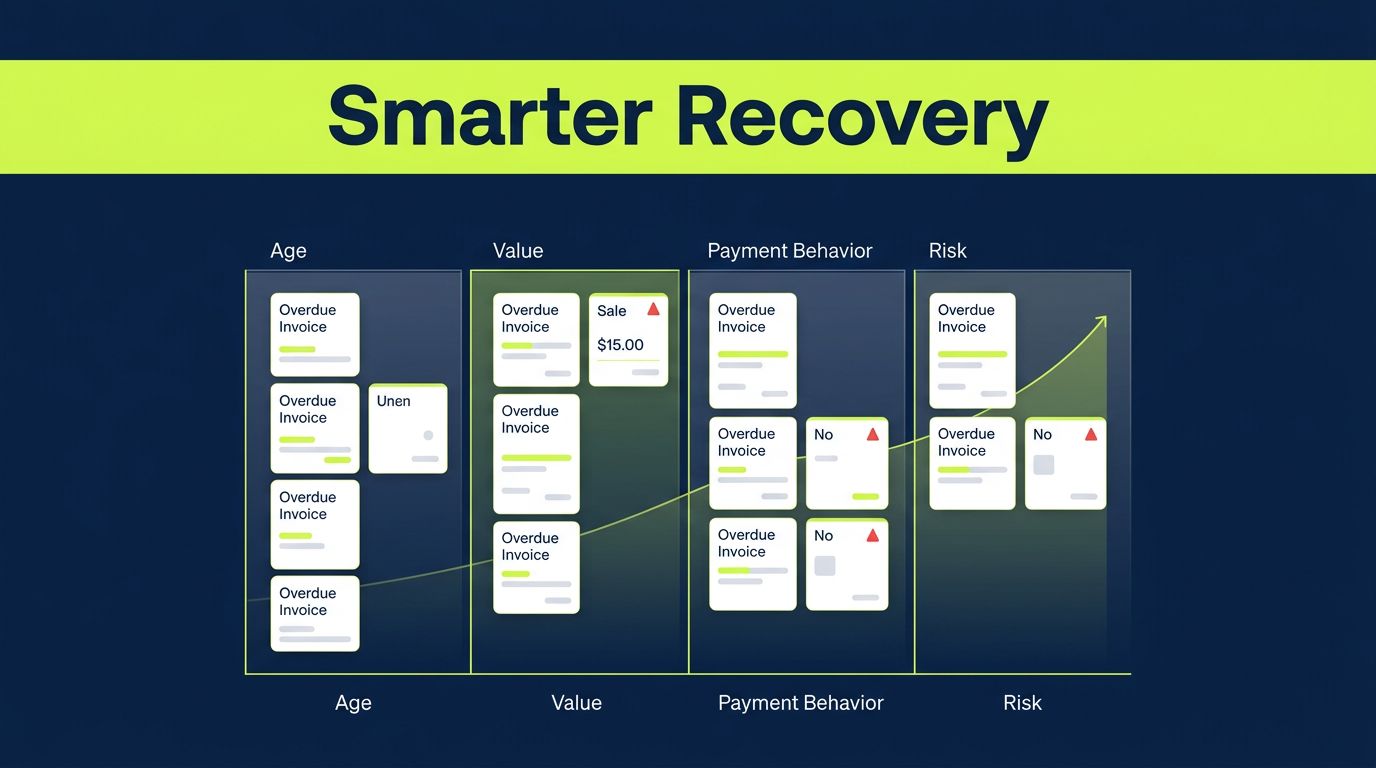
Unpaid invoices can drain cash flow long before they become a legal problem. When your team treats every debtor the same way, easy payments get missed while complex accounts absorb too much time.
Data-driven debt segmentation helps you group overdue accounts by debt value, age, payment behavior, dispute status, location, and ability to pay. Government-style predictive methods offer useful ideas for ranking risk and acting early. Segmentation provides a consistent starting point for proportionate debt management, with every decision guided by fairness, lawful data use, and human judgement.
Key Takeaways
- Data-driven debt segmentation groups overdue accounts by value, age, payment behaviour, disputes, documentation, and current account evidence so recovery action remains proportionate.
- Government-style predictive technology can help prioritise contact and resources, but scores should guide review rather than make automatic escalation, legal, or payment decisions.
- Human judgement, accurate records, lawful data use, and fair treatment must guide every recovery step, particularly where vulnerability, hardship, disputes, or incomplete evidence are involved.
- Start with clear, explainable signals and suitable actions for each risk segment, then measure recovery outcomes, complaints, costs, and potential bias to improve the model over time.
- Strong audit trails, access controls, and organised supporting documents protect customers and help your team or authorised recovery partners act efficiently.
Data-Driven Debt Segmentation: Applying Government Predictive Technology
Public sector agencies often use predictive analytics to prioritise limited resources. A model may flag cases needing early contact, identify patterns across large caseloads, or route a file to the right team.
The same Government Debt Strategy discipline can be adapted to commercial invoice recovery, without copying a public model uncritically. Instead of viewing an account as simply “paid” or “unpaid,” assess the facts around it. Then choose the most suitable recovery step, timing, and level of attention.
This approach supports practical debt management. Software can use automated workflows to route cases, schedule appropriate contact, and preserve human review. A new invoice with a reachable contact needs a different response than a high-value debt with ignored reminders and complete delivery records.
That does not mean permanently labelling a customer as high risk. It means deciding what should happen next based on current evidence. For example, an early-contact workflow might send automated reminders before moving a case to a senior reviewer.
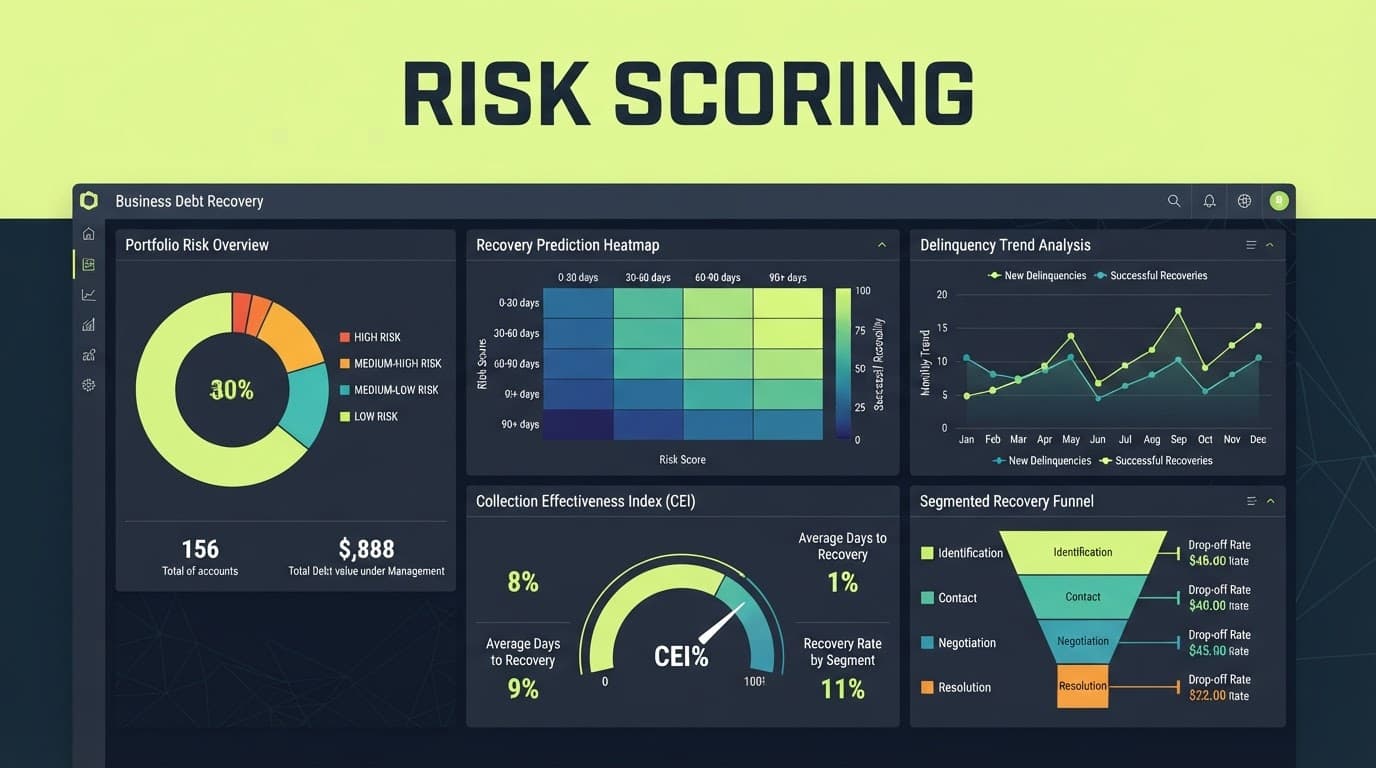
Dashboards can provide real-time insights into overdue balances, debtor responses, and changes in account status. If internal chasing has stopped producing results, review your Commercial Debt Recovery options before the account becomes harder and more expensive to recover.
What predictive technology can teach you about unpaid invoices
Predictive systems work best when they combine relevant signals instead of relying on one fact. For debt recovery, those signals might include days past due, previous payment delays, invoice amount, unanswered calls, open disputes, and broken payment promises.
A model also needs clear thresholds. For example, an invoice may move to a senior review queue after two unanswered contacts and 45 days overdue. When a debtor responds with proof of a genuine dispute, the account should leave that queue immediately.
You don’t need advanced artificial intelligence to begin. A spreadsheet with consistent columns can reveal recurring patterns, while digital tools can support more advanced analysis. Natural language processing may help categorise correspondence, dispute emails, or payment promises, but staff must verify the output.
Collections platforms can add automation later, including optional self-service portals where debtors can view statements or make payment arrangements. FICO’s overview of debt collection analytics also describes how scoring can guide contact strategies and case priority.
Why human review must guide every recovery decision
A score can miss the reason behind nonpayment. Your records may contain an incorrect contact, a late delivery, a disputed rate, or evidence that the customer’s business has suffered a temporary interruption.
Review the underlying file before escalating. Give the debtor a fair opportunity to explain the position and provide documents. Do not use an automated score as the sole reason for aggressive contact, legal action, or rejecting a reasonable payment plan.
A recovery score should direct attention, not replace the review of invoices, contracts, correspondence, and the debtor’s response.
How to Segment Commercial Debts Before You Take Action
Start with data you can verify. Pull invoices, account statements, contracts, purchase orders, delivery records, payment notes, dispute correspondence, and contact history into one account view. This consolidated record supports reliable debt management decisions.
The point of data-driven debt segmentation is to match an account with a proportionate response. Verified invoice, contract, and account data can reveal useful patterns through predictive analytics. Property debts, rent arrears, and international claims can involve different rules, documents, and enforcement routes. Keep those cases separate from routine unpaid trade invoices.
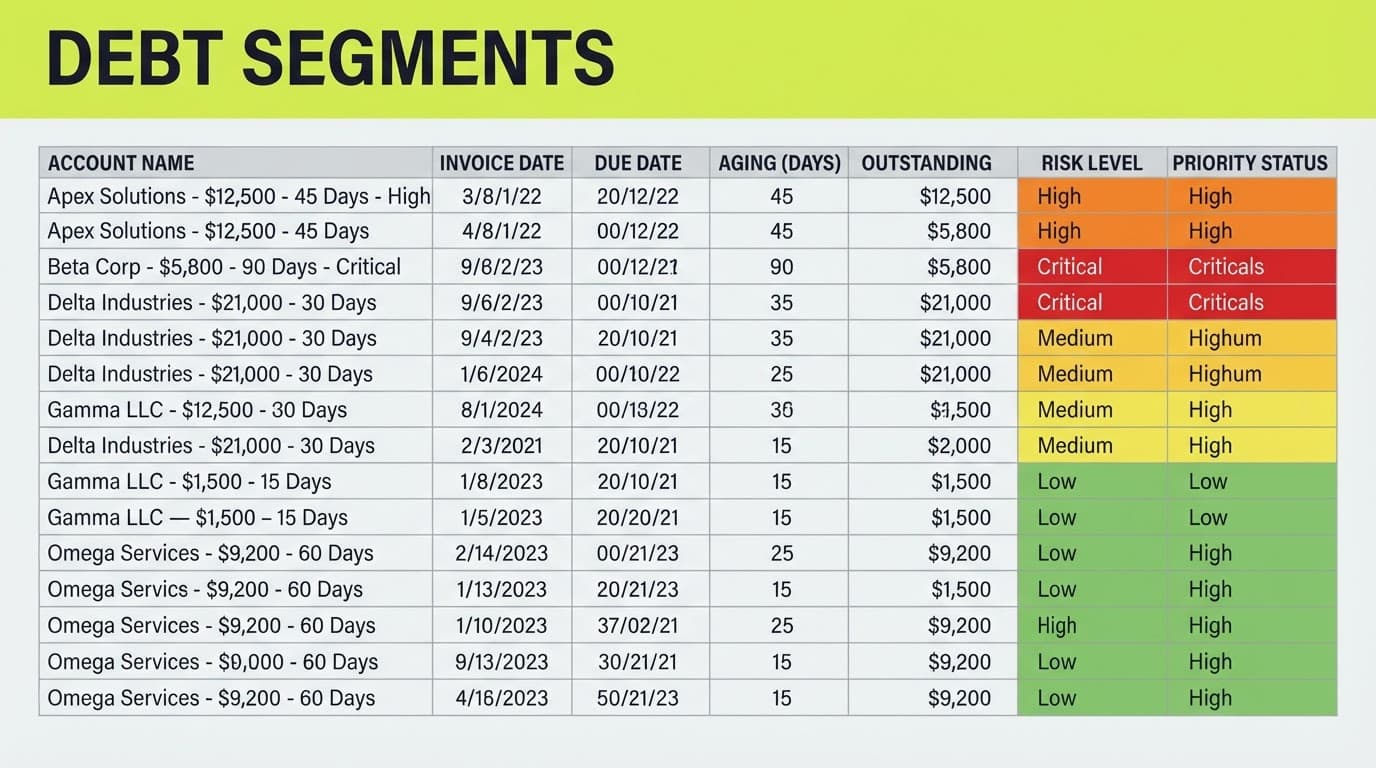
### Group accounts by debt value, age, and payment behavior
High-value debts deserve closer review because errors, concessions, and delays carry greater financial consequences. However, a large balance should not trigger harsher treatment by itself. Look at the evidence, the relationship, and the likelihood of recovery.
Separate newly overdue invoices from aged accounts. A five-day overdue invoice may need a polite reminder and a statement check. An invoice overdue for months may require stronger documentary review, limitation-period checks, and a clear escalation decision.
Payment behavior adds useful context. A customer who normally pays within 30 days but suddenly misses one invoice may need a quick conversation. Repeated delays or several failed payment arrangements justify earlier intervention on future transactions, including a credit hold where your contract permits it.
Group aged, high-value, unresponsive, or insolvency-linked files as high-risk accounts. Keep that label reviewable and based on current evidence, rather than treating it as a permanent judgement.
Separate disputed, undocumented, and straightforward debts
A genuine dispute is not the same as simple nonpayment. Create separate groups for pricing disagreements, incomplete delivery records, quality complaints, missing purchase orders, and invoices supported by clear documents. Consumer debt should not automatically be mixed with commercial invoice claims, as different protections and processes may apply.
When your evidence is incomplete, fix the file before demanding payment again. Ask the sales, operations, or service team for the signed order, delivery confirmation, acceptance email, or agreed scope of work. Resolving the root issue can recover cash faster than repeated demands.
Straightforward, well-documented debts can follow a more direct contact sequence. You can send a statement, confirm the invoice reached the right person, request a payment date, and record every response.
Use location, industry, and debtor behaviour with care
Location can affect court jurisdiction, language, time zones, and the availability of local recovery support. Industry can also affect payment cycles. Construction, freight, and public-sector supply chains may have documentation or approval processes that differ from other sectors.
Behavioural patterns are more useful when they are current and factual. Broken payment promises, bounced emails, a closed office, or credible insolvency information may change the next step. Customer sentiment from correspondence tone can provide supplementary context, but it must never override documentary evidence or create unfair treatment. Broad assumptions about a postcode, demographic group, or company type should never decide how you treat a debtor.
Use lawful business data that relates directly to the account. Appropriate data sharing may involve relevant internal teams or authorised recovery partners, with suitable access controls. Research on predictive credit-risk analytics highlights why data quality and model governance matter when risk scores influence financial decisions.
Build a Predictive Debt Recovery Model You Can Trust
Your model should answer one practical question: what is the next best action for this account? Treat it as a debt management tool using predictive technology to guide that choice. It should not judge a business owner or make irreversible decisions without review.
Choose signals that connect to payment outcomes
Use signals you can explain and test against your own recovery history. Days past due, invoice amount, prior delays, unanswered contacts, broken promises, active disputes, documentation quality, payment behavior, and signs of closure can all be relevant.
Predictive analytics can test relationships between overdue days, documentation, contact outcomes, and payment outcomes. Introduce machine learning only when you have enough reliable historical information, clear validation, and human oversight.
Each signal needs a clear reason. If accounts with complete delivery evidence and 60 days overdue respond well to senior outreach, record that result. If a signal has no measurable link to payment outcomes, remove it.
Academic work on decision support for debt collection reflects the same principle: a collection strategy should weigh several account factors rather than rely on a single trigger. The Government Debt Strategy also shows how data can support resource prioritisation, but a commercial recovery model is not a public-sector policy or enforcement system.
Set recovery actions for each risk segment
Risk scoring should recommend a review queue, not decide an outcome by itself. A simple framework can keep your team consistent:
| Recovery priority | Typical account profile | Suitable next action |
|---|---|---|
| Low | Newly overdue, responsive contact, no dispute | Reminder, statement review, agreed payment date, self-service portals |
| Medium | Late payment pattern, missed promise, incomplete response | Senior contact, short repayment plans, credit review |
| High | High-risk accounts identified by objective evidence, including aged, high-value, documented, unresponsive, or closure concerns | Specialist referral, formal demand, legal review |
The table gives you a starting point, not a fixed script. Risk scoring is not an automatic escalation decision. A high-priority score should prompt a file review before escalation. Likewise, a low-priority account can become urgent if new insolvency information appears.
Set checkpoints for negotiated plans, credit holds, formal letters, and referral. Industry guidance on debt collection strategies also emphasises matching treatment to account risk rather than applying one contact method to every case.
Measure results and improve the model over time
Track debt recovery rates, contact-to-payment rates, average days to recovery, payment-plan completion, and dispute resolution time. Also monitor operational costs and complaints.
Compare these results across segments every month or quarter. Use real-time insights where available, then review the results for adverse outcomes between groups.
Correct inaccurate data and remove signals that don’t improve outcomes. Review whether one group receives disproportionate escalation without a sound account-based reason. Regular human audits keep data-driven debt segmentation practical and fair.
Protect Customers, Data, and Your Business While Using Predictive Tools
Predictive tools make good records central to responsible debt management. Use accurate information, restrict access, and follow retention rules. Use digital tools to control permissions, preserve audit trails, and record human overrides.
Document how each score works, which factors it considers, and who can override it. Set these controls within suitable compliance frameworks. Check UK data-protection, debt-collection, contract, and sector-specific requirements to support regulatory compliance before automating contact or escalating a case.
Avoid unfair bias and automated collection mistakes
Historical data may contain outdated errors or reflect inconsistent past treatment. Missing records and proxy variables can also cause one group of debtors to receive harsher treatment without a valid reason.
If natural language processing classifies dispute correspondence or vulnerability indicators, test its results and explainability first. Require human review before making any contact decision. Treat reported vulnerability, financial difficulties, or temporary hardship as reasons to pause and offer supportive review, not harsher treatment.
Test outcomes by customer group and geography where lawful. Investigate unusual patterns, correct mistakes promptly, and let people challenge inaccurate information.
Keep strong evidence for every recovery step
Organised evidence lets you act quickly without making unsupported claims. Keep contracts, invoices, purchase orders, delivery or service records, statements, contact logs, dispute correspondence, payment promises, and model review notes.
For risk scoring, retain the factors used, score date, resulting decision, and any human override. Limit data sharing to authorised colleagues, vetted agencies, or solicitors who need the documents for the claim.
These records help a specialist agency, solicitor, or debt resolution services provider understand the claim without repeating work. A complete file makes it easier to choose a firm and respectful recovery route.
Frequently Asked Questions
Do you need artificial intelligence for debt segmentation?
No. You can start with a spreadsheet tracking overdue days, invoice value, disputes, payment history, and contact outcomes. Data quality and consistency matter more than software complexity.
Can you use a score to start legal action?
A score shouldn’t make that decision alone. Review the contract, supporting evidence, dispute history, limitation issues, and applicable laws before seeking legal advice or issuing a formal demand.
How often should you update debt segments?
Update an account when new information arrives, such as a payment promise, dispute, returned email, or evidence of business closure. Review the overall model monthly or quarterly as part of ongoing debt management, so old patterns don’t control current decisions.
What should happen when a debtor disputes an invoice?
Pause routine collection pressure and investigate the dispute. Confirm the contract terms, pricing, delivery, and communications. Record the outcome before deciding whether payment is still due.
Can segmentation help prevent future late payments?
Yes. If you identify repeat late-payment patterns, you can tighten credit terms, request deposits, shorten payment windows, or offer repayment plans. Self-service portals can also make statements, arrangements, and payments easier to manage. Apply these controls consistently and according to your contract.
Use Data to Focus Recovery Effort
A well-run segmentation process supports consistent debt management, earlier action, focused effort, and decisions based on each invoice’s facts. Government predictive technology offers useful methods, but it does not provide a ready-made private collection system.
Clean your records, define clear account groups, and keep people responsible for final decisions. When a debt is aged, disputed, international, or high value, use payment behavior alongside other facts and consider vetted debt resolution services to choose the next appropriate step.