





Late payment rarely begins as a collection problem. It often starts with a missed reminder, an unresolved query, or a customer whose cash position has changed. Predictive debt collection gives you a way to spot those warning signs before an invoice becomes costly to recover.
The UK government’s 2026 to 2030 debt strategy points towards earlier contact, stronger data use, tailored routes to resolution, and clearer standards. If you manage unpaid invoices, those priorities offer a useful view of where private recovery may be heading.
Key Takeaways
- Government debt strategy now places data, analytics, and earlier intervention alongside fair and affordable resolution.
- Predictive models can help you prioritise accounts, but they can’t replace human judgement or an affordability assessment.
- For B2B debt recovery, your best data often already sits in your accounting system, CRM, and customer correspondence.
- A responsible debt recovery agency should use evidence-based prioritisation without treating customers as automated scores.
- Better invoice controls and fast dispute handling reduce the number of accounts that reach formal recovery.
What the Government’s 2026 to 2030 Strategy Tells You
The government’s 2026 to 2030 Debt Management Strategy is titled “Prevent, Resolve, Improve.” It applies to debt owed to public bodies, not private invoices. However, its direction matters because public and private collectors face similar pressures: incomplete information, avoidable arrears, disputed balances, and a need for consistent treatment.
The strategy’s Prevent pillar focuses on stopping avoidable and problem debt. It supports timely communication, payment systems that encourage on-time payment, and earlier contact through different channels. For your business, that means collections should begin well before an account reaches the point of legal escalation.
Its Resolve pillar links better outcomes with timely data, enhanced analytics, and approaches tailored to individual circumstances. It also makes a clear distinction between people who need a workable route to payment and those deliberately avoiding repayment. Private recovery organisations are likely to make the same distinction more often, using account history to decide where a personal call, a payment proposal, or a firmer escalation is appropriate.
Finally, Improve calls for wider access to digital tools, AI and analytics, more consistent metrics, and stronger professional standards. The Government Debt Management Function is developing this approach for about 8,000 public servants involved in debt management. A report on the strategy’s predictive technology plans describes a push to use historical data and analytics to anticipate likely outcomes.
A useful prediction identifies the next best action. It should never become a reason to ignore evidence, vulnerability, a genuine dispute, or a customer’s ability to pay.
How Predictive Debt Collection Works in Practice
Predictive debt collection uses past and current account information to estimate what may happen next. A model might identify which invoices are likely to be paid after a reminder, which customers need a call, and which cases may need external recovery.
For commercial debts, useful signals can include:
- Previous payment timing and broken payment promises
- The age and value of the invoice
- Whether a customer has opened reminder emails or replied to messages
- Credit-control notes, active disputes, and delivery evidence
- Changes in ordering patterns or repeated partial payments
These signals help you sort a long debtor list into smaller, more sensible work queues. Instead of treating every overdue invoice the same, you can contact accounts where early intervention has the strongest chance of payment. You can also keep disputed or sensitive accounts out of automated chasing until someone reviews the facts.
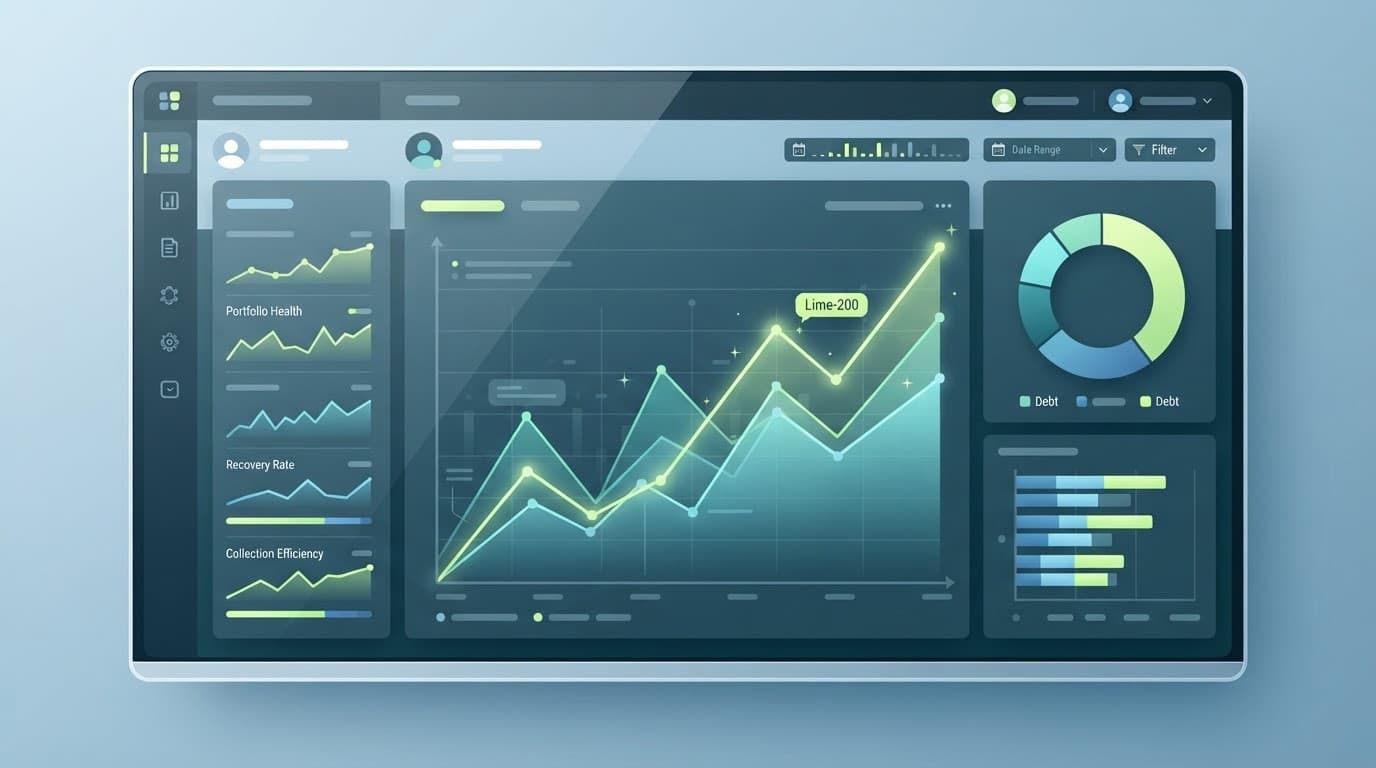
In practice, the most useful models are often modest. You don’t need a complex AI system before you can act on payment patterns. A weekly report showing invoices that are 7, 14, and 30 days overdue, grouped by payment history and dispute status, can improve your decisions immediately.
Still, a prediction is only as sound as the information behind it. If your team records every delay as “customer won’t pay,” your data will produce poor priorities. A clear distinction between a missing purchase order, a service complaint, a cash-flow issue, and deliberate non-payment matters.
Earlier Intervention Will Matter More in Debt Recovery UK
The government’s approach places weight on preventing debt rather than collecting it after it hardens. For private businesses, that points towards payment processes that reduce friction before an invoice becomes overdue.
Start with the basics. Confirm the legal entity, billing contact, purchase order, agreed payment terms, and delivery evidence before you issue the invoice. Send the invoice promptly, then make the payment route easy to use. When payment is late, contact the customer early and ask whether there is an issue with the invoice.
That early conversation can protect a commercial relationship. It can also show you whether the debt is straightforward, disputed, or likely to require escalation. For example, a customer may reveal that an invoice went to the wrong finance mailbox. Another may challenge a service milestone. Those are very different cases, and a generic collections sequence will not handle them well.
For debt recovery UK teams, the likely direction is a more segmented process:
| Account position | Suitable response |
|---|---|
| Recently overdue with no prior issue | Friendly reminder and a simple payment route |
| Regular late payer with a known pattern | Prompt contact tied to previous commitments |
| Invoice with a documented query | Pause collection activity while the dispute is reviewed |
| Repeated broken promises or no engagement | Escalate with a clear deadline and evidence file |
| Signs of financial difficulty | Human review and realistic payment discussion |
The goal is not to give every debtor a different experience. It is to give similar cases consistent treatment, while preserving room for a person to make a fair decision.
Where Automation Must Stop
Analytics can rank accounts, draft reminders, and prompt your team to review missing evidence. It should not make irreversible decisions on its own. This is especially important where an account may involve personal guarantees, a sole trader, residential rent arrears, or any sign that repayment would cause hardship.
A model may flag a customer as unlikely to pay because they missed two prior dates. Yet the account manager may know that the business has a confirmed contract payment due next week. Your team needs a way to record that information and override the automated route.
You should also test whether your data produces unfair outcomes. A system that gives more pressure to customers who do not respond digitally may overlook language barriers, inaccessible communications, or a contact email that no longer works. Give customers clear ways to contact you and check that your records are accurate.
For B2B debt recovery, human review remains especially important where liability is unclear. A buyer may dispute the quality of goods, deny receipt, or say an employee lacked authority to place the order. A predictive score cannot resolve a contractual argument. It can only tell you that the file needs attention.
A Practical Checklist for Private Recovery Organisations
Private recovery providers can take useful steps now, even without a new platform or large data project.

- Audit your account notes and codes. Separate disputes, broken promises, incorrect contact details, affordability concerns, and confirmed refusal to pay.
- Set clear review points before escalation. A high-value, disputed, aged, or cross-border debt should not follow the same automated sequence as a routine invoice.
- Track outcome data. Measure payment after each contact type, plan completion, dispute resolution time, and the point at which legal action becomes necessary.
- Keep a human approval step for payment plans, litigation referrals, and cases with indicators of hardship or vulnerability.
- Review communications for clarity. State the balance, invoice references, deadline, payment options, and a named route for raising a dispute.
- Test your models against real outcomes each quarter. Remove variables that add bias or do not improve collection decisions.
- Keep a complete evidence pack. Contracts, purchase orders, invoices, delivery records, emails, statements, and payment history can determine whether a claim succeeds.
If your internal team has exhausted early contact, an external specialist may be the right next step. Debt Recovery Hub can help you identify a suitable agency based on the debt’s value, age, location, documentation, and complexity.
Choosing a Data-Aware Debt Recovery Agency
A capable debt recovery agency should ask detailed questions before promising a result. You should expect questions about the contractual basis of the debt, the debtor’s legal name, prior contact, supporting documents, any dispute, and the outcome you want.
Ask how the agency prioritises files. A responsible answer will describe practical factors, such as debt age, evidence quality, debtor engagement, and previous contact history. It should also confirm that trained staff review disputed, sensitive, or unusual cases.
Avoid providers that treat automation as a substitute for judgement. Strong recovery work combines accurate data with firm, respectful communication and a sensible escalation path. If court action may be needed, you should know the likely costs, risks, and evidence gaps before you proceed.
The Direction of Travel Is Earlier, Fairer Recovery
The government’s strategy does not dictate how private creditors must collect their invoices. Still, it points towards a clear operating model: use better information earlier, direct cases to appropriate treatment, and keep affordability and fairness in view.
For your business, predictive debt collection is most useful when it makes your next action more informed. It can help you recover cash sooner, reduce avoidable disputes, and send complex files to the right specialist with the evidence already in place.