
An invoice without a valid, pre-approved purchase order will usually come back to you unpaid or sit on hold until you supply one. Before you resend anything, get the PO number from whoever ordered the work, check your invoice against VAT and buyer field requirements, and remember that statutory late payment rights can still apply once the debt falls due.
TL;DR:
- A single-character PO mismatch can trigger automated rejection, so match the number, supplier details, quantities, and totals exactly, and send one invoice per file.
- Payroll, utilities, travel claims, and emergency work may be exempt; ask the buyer whether a retrospective PO is available for your case.
- Payment usually falls due within 30 days for public authority debts and up to 60 days for other commercial debts, subject to agreed terms and verification.
- After rejection, fix the stated error, contact the requester and accounts payable in writing, chase within 48 hours, and escalate internally after seven days.
- For overdue valid invoices, suppliers may claim statutory interest and collection costs; record supply, receipt, and acceptance dates because verification can shift payment deadlines.
Table of Contents
- What “no PO, no pay” actually means and how it works day-to-day
- Invoice checklist: what must be on your invoice
- Why buyers use the policy and when it doesn’t apply
- What to do the moment a buyer rejects your invoice
- Payment timelines and your rights under late payment rules
- Scripts and a timeline you can use today
- Balancing a buyer’s control with your cashflow
- How Debt Recovery Hub helps once you’ve exhausted the direct route
- FAQ
- Sources
What “no PO, no pay” actually means and how it works day-to-day
A no PO no pay policy means a buyer will not release payment on an invoice unless it carries a valid purchase order number that existed before the goods or services were supplied. The DWP’s own procurement policy sets this out plainly: invoices that lack a valid PO are returned or placed on hold until one is supplied.
Accounts payable teams run automated or manual matching between your invoice and the PO already logged in their system. The PO number, supplier details, quantities and amounts need to line up closely, because mismatches are usually what triggers a rejection rather than a judgement call by a person.
When your invoice fails that check, three things typically happen:
- The invoice is returned to you with a rejection reason or a request for the missing PO.
- It is placed on hold inside the buyer’s finance system until a valid PO appears.
- It is flagged as disputed, which usually means someone internally needs to resolve it before payment can proceed.
Buyers adopt this control because it stops spend happening outside an approved budget, which matters more to large organisations than it might seem from the supplier side.
Invoice checklist: what must be on your invoice
Before you resubmit anything, check it against two sets of requirements: what HMRC mandates for VAT invoices, and what your specific buyer expects to see.
HMRC’s VAT record-keeping guidance requires every VAT invoice to include, and sellers can use tools to avoid VAT mistakes with marketplaces like Amazon, as explained in reconciling Amazon settlements for UK accounting:
- A unique, sequential invoice number.
- Your business name, address and VAT registration number.
- The buyer’s name and address.
- A description of the goods or services supplied.
- The date of supply and the invoice date.
- The amount payable, excluding VAT, and the VAT rate and amount for each item.
- The total amount payable, including VAT.
On top of that, most buyers running a no PO no pay system expect the PO number quoted exactly as issued, with line descriptions and totals matching the PO rather than a close approximation. Even a single-character mismatch between an invoice reference and a PO number can trigger an automated rejection in finance systems built to validate exact matches.
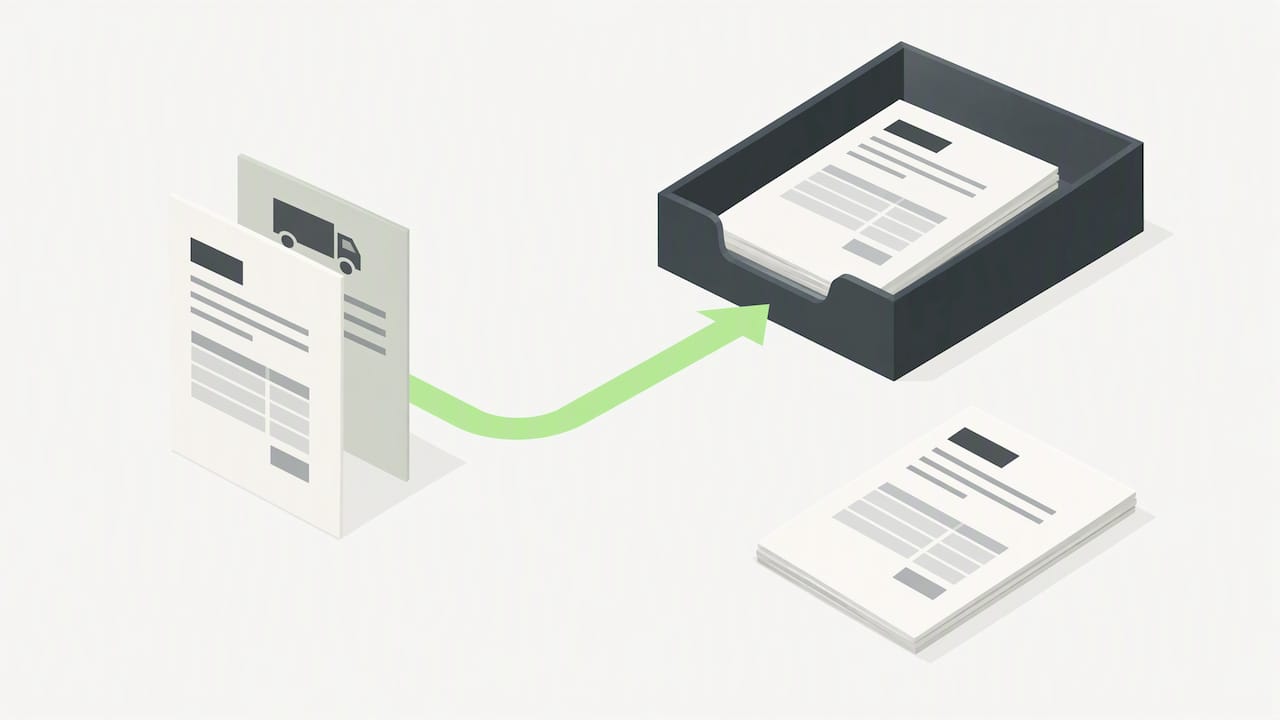
Two technical habits cause a surprising number of rejections: bundling several invoices into one PDF, and sending the invoice to the wrong department or inbox. Send one invoice per file, name it clearly, and attach supporting evidence such as a delivery note where the buyer’s process calls for it.
Why buyers use the policy and when it doesn’t apply
Buyers run this control to keep spend inside an approved budget and stop goods or services being ordered without anyone signing off on the cost first. Procurement commentary on the policy notes that it works well when PO approval is fast, and causes friction when approval chains are slow or overly complex, which is the most common complaint about the policy from suppliers and buyers alike.
Most organisations carve out exceptions rather than applying the rule universally. Typical exempt categories include:
- Payroll and statutory payments.
- Utilities and fixed contract charges.
- Travel and subsistence claims.
- Purchasing card (P-card) transactions below a set threshold.
- Emergency or urgent works authorised outside the normal process.
If your invoice falls into one of these categories but still gets held, ask the buyer directly whether a retrospective PO can be raised, since many organisations allow this for genuine exceptions rather than treating every missed PO as a hard block.
What to do the moment a buyer rejects your invoice
Act quickly and methodically rather than resending the same invoice and hoping it clears on a second attempt.
- Check the rejection reason first: confirm whether it is a missing PO, a mismatched PO number, a wrong recipient, or an incorrect VAT field.
- Do not resubmit the invoice unchanged. Fix the specific cause before sending it again.
- Contact accounts payable with your invoice reference and ask what PO number, if any, is on file for this order.
- Contact the person who originally requested the goods or services, and ask them to confirm or raise the correct PO number in writing.
- When you resubmit, attach the PO copy, a delivery note or signed acceptance, and any proof of delivery or completion the buyer’s process requires.
- Chase for a response within 48 hours if you have heard nothing.
- Escalate internally within your own business after 7 days if the buyer has not resolved the issue, and start a documentation file.
- Prepare the evidence for a formal late payment claim if the debt remains unresolved at 30 and then 60 days.
Pro Tip: Keep a simple email archive that ties each invoice to its requester, PO number and confirmation message. It becomes the single most useful piece of evidence if you later need to chase payment or claim interest.
More detail on handling the procurement side of this is covered in our guide to procurement payment delays.
Payment timelines and your rights under late payment rules
A rejected invoice does not cancel your right to be paid on time once a valid PO and invoice are in place. The Late Payment of Commercial Debts Regulations 2013 set maximum payment periods of 30 days for many public authority debts and up to 60 days for other commercial debts, unless a longer period is expressly agreed and not grossly unfair.
Where a contract requires formal verification or acceptance of goods or services, that process can shift when the payment clock starts, so it matters to document:
- The date goods or services were actually supplied.
- The date the buyer received your invoice.
- The date any PO confirmation or written exception was provided.
- The date any acceptance or verification procedure was completed.
Once payment is genuinely late, you may be entitled to statutory interest and to recover reasonable costs of collecting the debt. Supporting evidence, such as the PO confirmation archive mentioned above, makes that claim far easier to pursue.
Scripts and a timeline you can use today
Having a fixed sequence removes the guesswork from chasing a rejected invoice, and gives you something consistent to send every time.
- Within 48 hours of rejection: email the original requester: “Our invoice [reference] has been returned for a missing PO. Could you confirm the PO number or raise one so we can resubmit promptly?”
- Day 7: if no PO has been confirmed, follow up with accounts payable directly, copying the requester, and ask for a written update on status.
- Day 14: escalate within your own organisation and request a formal response in writing from the buyer, referencing the original supply date.
- Day 30 to 60: if payment is still outstanding once a valid PO exists, assemble your documentation and consider formal recovery steps.
Pro Tip: Always put requests in writing, even after a phone call, so you have a timestamped record if the matter needs to go further.
For ready-made wording at each stage, our guide on stopping payment excuses in 48 hours walks through the full set of scripts and escalation points.
Balancing a buyer’s control with your cashflow
Procurement controls like no PO no pay exist for good reasons, but they shift the administrative burden onto suppliers who rarely caused the problem. The fastest route through it is clear, written confirmation of every PO and exception, chased promptly rather than left to drift.
— Jack
How Debt Recovery Hub helps once you’ve exhausted the direct route
When you’ve documented your attempts to secure a PO, chased accounts payable, and the invoice is still unpaid well past its due date, you may consider seeking help from a debt collection agency suited to your specific case rather than searching for one without guidance.

Recommendations for collection agencies can be based on factors like debt type, amount, age, and buyer’s sector to provide a more tailored match than a generic referral.
- We cover unpaid invoices through our unpaid invoice recovery service for cases where internal escalation has stalled.
- We handle broader commercial disputes through business debt recovery once a debt is clearly overdue and documented.
- We support corporate and contract disputes through corporate debt recovery where multiple invoices or a larger account are involved.
If your invoice has been stuck for weeks with no PO forthcoming and the buyer isn’t responding, get in touch through unpaid invoice recovery and we’ll match you with an agency suited to the case.
This article is general information, not a substitute for advice from a qualified financial advisor. Consult a qualified financial professional about your own circumstances before acting on anything here.
FAQ
What is a no PO no pay policy?
A no PO no pay policy means a buyer will not process or pay an invoice unless it quotes a valid purchase order number that was approved before the goods or services were supplied. Invoices without one are typically returned or held, as DWP’s published policy describes.
What does “no PO” mean on an invoice?
“No PO” means the invoice does not reference a purchase order number the buyer’s system recognises, usually because none was raised, the number is wrong, or it does not match the order on file. It is the single most common reason invoices get returned under this type of policy.
Can you legally refuse to pay an invoice?
A buyer can refuse to process payment where a contractual or policy requirement, such as a valid PO, has not been met, provided that requirement was agreed or clearly communicated in advance. Once a genuine debt is due, however, the Late Payment of Commercial Debts Regulations 2013 still give suppliers rights to statutory interest and recovery costs if payment is unreasonably delayed.
Can you invoice without a PO?
You can issue an invoice without a PO, but under a no PO no pay policy it will usually be returned or held rather than paid. It is far faster to confirm the PO number with the requester before invoicing than to resolve a rejection afterwards.
Sources
- DWP procurement: No purchase order, no pay policy
- The Late Payment of Commercial Debts Regulations 2013 (explanatory text)