



Yes, a properly drafted and incorporated retention of title clause can be enforced in the UK, but only where specific legal conditions are met. If you suspect a buyer is heading into insolvency, preserve every document proving incorporation and identity of the goods, notify the insolvency office holder in writing immediately, and never attempt unauthorised repossession.
TL;DR:
- Agree the clause in signed terms before the first delivery; invoice wording added after contract formation usually fails incorporation, so keep proof of acceptance.
- Claims are strongest when goods remain unchanged, unmixed, and traceable to delivery notes through serial numbers, batch codes, or stock records.
- Simple clauses covering specified goods carry less risk than all sums or proceeds clauses, which may be treated as unregistered charges.
- Once administration begins, a moratorium bars unilateral repossession; notify the office holder in writing, provide supporting records, and seek consent or a court order.
Table of Contents
- What retention of title means and the legal basis behind it
- Common RoT clause types and the drafting mistakes that sink them
- How courts and office holders actually test an RoT claim
- What changes once the buyer enters insolvency
- A step by step checklist to preserve and pursue your claim
- What recovery actually looks like, and where each route runs out
- What the official guidance and legislation actually tell suppliers
- Why retention of title is one tool, not the whole answer
- How we help when retention of title disputes get complicated
- FAQ
- Sources
What retention of title means and the legal basis behind it
A retention of title clause lets you keep legal ownership of goods you have supplied until the buyer meets a condition, usually full payment. The idea sits on a straightforward principle: you cannot lose what you never gave away. The statutory root is section 19 of the Sale of Goods Act 1979, which allows a seller to reserve the right of disposal of goods even after they have been delivered, until the stated conditions are fulfilled.
Section 17 of the same Act works alongside section 19: property in goods passes when the parties intend it to pass, and that intention is judged from the contract terms, how the parties behaved and the surrounding circumstances. This matters because a court or an insolvency office holder will not assume ownership transferred on delivery. They will look at what the contract actually says and whether that was agreed before the goods changed hands.
Appropriation and identification sit at the centre of this. Where a contract covers specific, identifiable goods, or goods have been clearly set aside for that contract, a seller’s reservation of title is far easier to enforce. Once goods are mixed into a larger stock, processed into something new or sold on to a third party, identifying “your” goods among the rest becomes difficult or impossible, and the claim usually fails with them.
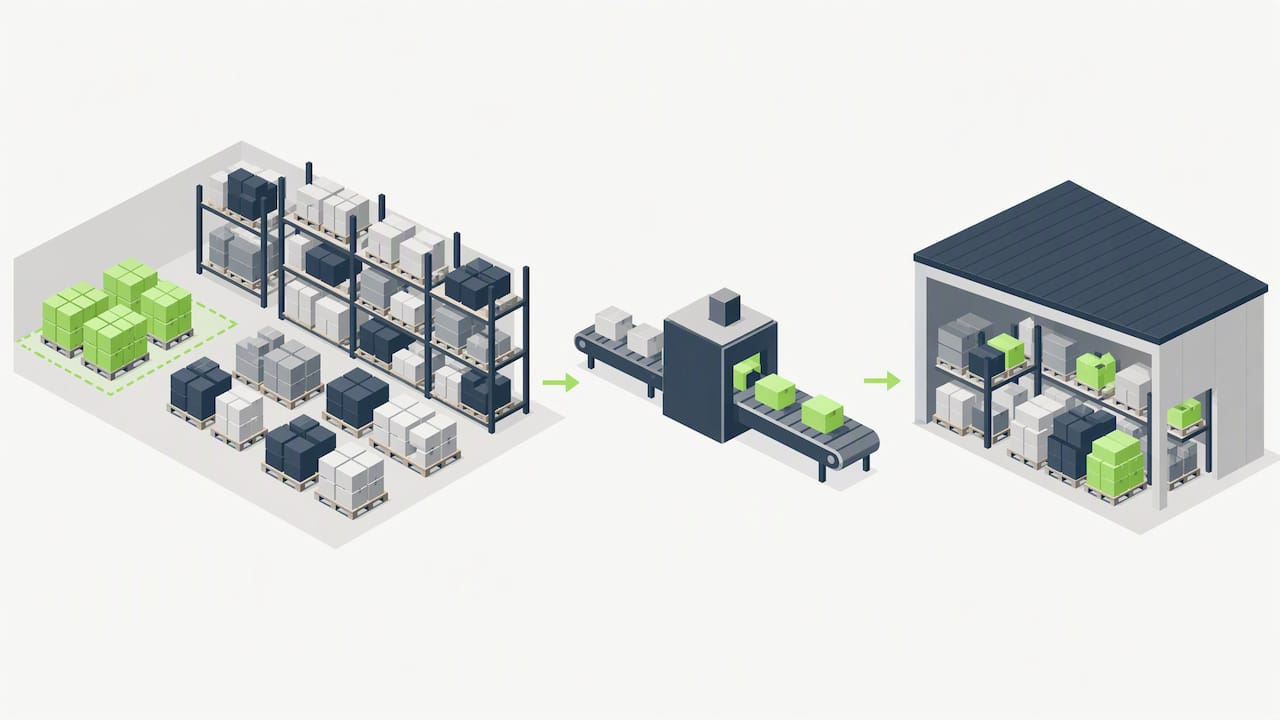
The technical guidance for official receivers sets out what an official receiver actually checks when a supplier raises a retention of title claim in an insolvency. The guidance confirms that under section 19, a clause can reserve the right of disposal until payment, but for it to hold up, the clause must have been incorporated into the contract before supply and the goods must still be identifiable. If goods have been converted, such as cloth made into garments, the guidance notes that title is lost because the goods have fundamentally changed in nature.
Three things an official receiver or administrator will check before accepting a claim:
- Whether the retention of title term was part of the contract before the goods were supplied, not added afterwards.
- Whether the specific goods can still be identified, separated and matched to your paperwork.
- Whether the goods remain unchanged, unprocessed and unmixed with other stock.
Suppliers who can answer yes to all three are in a strong position. Suppliers who cannot may find their claim treated as an unsecured one.
Common RoT clause types and the drafting mistakes that sink them
Not all retention of title clauses are drafted the same way, and the type you have shapes how likely it is to survive a dispute.
A simple or specific goods clause reserves title over the exact goods supplied until payment for those goods is received. This is a straightforward version because it identifies the goods covered without attempting to reach beyond them.
An all sums or all monies clause extends retention of title to cover everything the buyer owes you, not just the invoice for the goods in question. This gives broader protection but increases the risk that the clause starts to resemble a form of security interest over the buyer’s assets rather than a straightforward reservation of ownership, which can raise registration questions.
Tracing, proceeds and aggregation clauses try to go further still, following goods into finished products they have been incorporated into, or claiming a right over the money a buyer received when it resold your goods. These clauses are the most prone to failure. Without a genuine fiduciary relationship between you and the buyer, or formal registration of the interest, courts and office holders generally treat an attempt to claim proceeds as an unregistered charge, which is usually unenforceable against other creditors.
Several drafting pitfalls can undermine a claim:
- Terms printed only on the invoice, which arrives after the contract and the goods, so never incorporated in time.
- Retention wording introduced after the first order was placed and accepted.
- Resale authority left ambiguous, so it is unclear whether the buyer was permitted to sell the goods on at all.
- No serial numbers, batch codes or stock records tying specific units to your contract.
Pro Tip: Keep your retention of title wording in a signed master terms document the buyer agrees to before the first delivery, not buried in small print on an invoice that arrives afterwards.
How courts and office holders actually test an RoT claim
When your claim lands in front of a court or an insolvency office holder, it gets tested against a small number of consistent questions, and the answers decide whether you recover anything.
- Was the clause incorporated before supply? You need evidence the retention of title term was agreed as part of the contract, not introduced later. Signed terms, a referenced credit application or a clear course of dealing all help; an invoice footnote on its own rarely does.
- Are the goods still identifiable? If the office holder can point to your stock on a shelf, matched to a delivery note and purchase order, your position is strong. If the goods have been mixed with others from a different supplier, that specific identity is usually gone.
- Have the goods been processed or manufactured into something else? The GOV.UK guidance is explicit that converting raw materials into a new product, such as turning supplied cloth into finished garments, breaks the chain of ownership. Retention of title generally applies only while goods remain in an unchanged state.
- Does the clause, in substance, create a registrable charge? Where a clause reaches beyond the specific goods supplied, claiming proceeds of sale or rights over after acquired property, it starts to look like a security interest rather than a simple reservation of ownership. An unregistered charge of this kind is typically unenforceable against a liquidator or administrator.
Incorporation failure is, by some margin, the most frequent reason claims collapse. Practitioner commentary from Myerson notes that relying on invoice only terms is usually insufficient, because the invoice is generated after the contract is already formed. Suppliers who want a defensible claim need the term agreed in advance, ideally through a signed agreement or a clearly documented prior acceptance of terms.
A clause that reserves rights only over the specific goods supplied, kept unprocessed and identifiable, stands a materially better chance of surviving an insolvency challenge than one that tries to reach proceeds or manufactured products without registration.
Office holders carry a genuine legal exposure here too. Under the Insolvency Act 1986, an administrator or liquidator who knowingly sells goods subject to a valid retention of title claim can face personal liability. That exposure is precisely why written notice to the office holder matters so much: it puts them on clear notice and triggers their duty to investigate before disposing of anything.
What changes once the buyer enters insolvency
The moment a buyer enters administration or liquidation, the practical rules around recovering your goods shift sharply, and not in your favour.
Entry into administration triggers a statutory moratorium. This freezes creditors’ ability to take enforcement action, including repossessing goods, without the administrator’s consent or a court order. You cannot simply turn up and collect your stock once that moratorium is in place, even if your retention of title claim is watertight on paper.
The administrator or official receiver will assess a retention of title claim raised against the company’s assets. They are not entitled to simply ignore your letter, but they are also not obliged to hand goods back on request. Under the Insolvency Act 1986, office holders have statutory powers over property in the possession of others, alongside certain protections, but they can still be held liable if they knowingly dispose of goods they know belong to someone else.
The Corporate Insolvency and Governance Act 2020 adds a further layer. Certain contractual provisions, including some termination rights, cease to have effect once a company enters a relevant insolvency procedure, which means suppliers may only be able to terminate supply contracts with consent or court permission in some circumstances rather than relying on a contractual right to walk away.
In practice, this means:
- You cannot repossess goods unilaterally once a moratorium is in force, regardless of how clear your clause is.
- Office holders will often decline to release goods immediately, even where your claim looks strong, because releasing assets can disrupt a rescue plan or harm other creditors.
- Getting goods back typically takes written negotiation first, and a court application only if that negotiation stalls.
- Costs and timescales both increase once insolvency is formally underway, compared with chasing a solvent but slow paying buyer.
None of this means your claim is worthless. It means the route to recovery runs through the office holder and, if necessary, the court, rather than through your own warehouse team and a van.
A step by step checklist to preserve and pursue your claim
The moment you suspect a buyer is in financial difficulty, the quality of your paperwork becomes the single biggest factor in whether you recover anything.
- Gather your documentation immediately. Pull together the signed contract or master terms, purchase orders, invoices, delivery notes, and any serial numbers, batch codes or stock records that tie specific units to this buyer.
- Confirm when your retention of title term was agreed. Check the date the buyer accepted your terms against the date of the first delivery; if the term only appeared later, flag this as a weakness before you rely on it.
- Write to the buyer and, where one has been appointed, the office holder. State clearly which goods you are claiming, the contract and invoice references, and request written confirmation that the goods will not be sold or disposed of pending your claim.
- Attach exhibits to your claim letter. Include copies of the contract terms, the relevant invoices and delivery notes, and photographs of the goods if you can access the site, so the office holder has everything needed to assess the claim quickly.
- Do not attempt self-help repossession. Do not attempt to take goods back without consent or a court order. Work with the office holder to pursue your claim.
- Seek permission or a delivery-up order if negotiation stalls. Where the office holder refuses or delays, your route is an application to court for a delivery-up order, not a second attempt at physical recovery.
Pro Tip: Photograph goods with their batch or serial numbers visible as soon as you suspect trouble. A dated photo matched to your delivery note is often the single piece of evidence that convinces an office holder your claim is genuine.
On timing, expect a written notice and response from the office holder within a matter of weeks rather than days, with a court application, if needed, adding further time and legal cost on top. Suppliers who send clear, well evidenced notice early tend to get faster, more favourable responses than those who send a vague letter after goods have already been mixed into general stock.
What recovery actually looks like, and where each route runs out
Once you have a credible retention of title claim, there are a limited number of realistic paths to getting your goods, or their value, back.
Recovery with the office holder’s consent is the most common outcome where a claim is clearly valid. This usually means negotiating directly with the administrator or liquidator, who may ask you to cover reasonable costs of storage, handling or transport before releasing the goods.
Court ordered delivery up becomes necessary where the office holder disputes your claim or simply will not engage. Seek legal advice on the merits and possible effects on other creditors or a business rescue.
Tracing or claiming proceeds of a resale is the narrowest route of all. It only works where you can show a genuine fiduciary relationship with the buyer over those specific proceeds, or where your interest was validly registered as a charge. Without either, a claim to proceeds is very likely to be rejected as an unregistered security interest.
Where retention of title fails altogether, your remaining options are:
- Consider whether you have a separate claim for the unpaid contract price.
- Submitting a proof of debt as an unsecured creditor, accepting you will rank behind secured creditors and preferential claims.
- Reviewing whether a separate debt recovery route against the insolvent company is worth pursuing alongside any remaining assets.
None of these fallback routes guarantees full recovery, which is exactly why getting the retention of title clause right at the drafting stage matters so much.
What the official guidance and legislation actually tell suppliers
The clearest signal in all of this comes from the GOV.UK technical guidance for official receivers: incorporation before supply, identifiability of the goods and the office holder’s duty of care are the three pillars your claim stands or falls on. Suppliers who can evidence all three in writing are in a fundamentally different position from those relying on assumption or an invoice footnote.
Section 19 of the Sale of Goods Act 1979 sets the statutory basis for reserving the right of disposal, while the Act’s approach to appropriation decides when, exactly, property passes to the buyer. The Insolvency Act 1986 and the Corporate Insolvency and Governance Act 2020 set the procedural boundaries, including the moratorium, that limit any attempt at self-help once insolvency formally begins.
Incorporation failure is the most frequent point of failure for retention of title claims; printing terms on invoices alone is typically insufficient. Suppliers should ensure terms are incorporated before accepting an order, ideally by signed agreement or clear prior acceptance.
That practitioner observation, from Myerson’s commentary on retention of title clauses, lines up precisely with what the official guidance checks for. If there is one lesson suppliers should take from both sources, it is that the clause needs to exist, in writing, agreed, before the first delivery goes out the door.
Why retention of title is one tool, not the whole answer
Retention of title clauses get treated, too often, as a silver bullet. They are not. A clause that is perfectly drafted still fails the moment goods are mixed into someone else’s manufacturing line, and even a textbook claim can sit unresolved for months while an administrator works through a rescue plan.
The more useful mindset is to treat retention of title as one layer in a wider credit control strategy, sitting alongside credit checks before you extend terms, clear payment triggers, and an early escalation habit the moment an invoice runs late. Waiting until a buyer has formally entered insolvency before checking whether your paperwork actually supports a claim is usually too late to fix any gaps.
Where a dispute turns genuinely complex, whether that is mixed goods, a cross-border buyer, or an office holder pushing back hard, bringing in insolvency practitioners or a specialist recovery partner early tends to save far more in legal cost and lost time than it spends.
— Jack
How we help when retention of title disputes get complicated
Retention of title claims can get tangled fast, particularly once goods have been processed, a buyer has assets in more than one country, or an office holder is contesting your evidence. We match suppliers facing exactly these situations with vetted recovery partners chosen for the specifics of the case, rather than leaving you to search for an agency on your own.

We ask for the detail that actually matters, the debt type, the amount, how old the claim is and where the buyer is based, and use it to put you in front of partners suited to that profile instead of a generic shortlist. That matters most where retention of title issues sit alongside wider insolvency recovery, mixed or processed goods, or an international buyer.
We cover this ground through our:
- Business Debt Recovery service, built for suppliers chasing unpaid commercial debts including insolvency related claims.
- Corporate Debt Recovery matches, suited to larger or more structurally complex company debts.
- Legal Debt Recovery partners, where a dispute looks likely to need formal court action.
Submit your case details and we will put you in touch with a vetted agency matched to your situation.
This article is general information, not a substitute for advice from a qualified lawyer. Consult a qualified legal professional about your own circumstances before acting on anything here.
FAQ
How long can a retention be held?
A retention of title clause has no fixed time limit in itself: it lasts until the condition it sets, almost always full payment, is satisfied. In practice, your realistic window to enforce it shrinks once goods are processed, mixed with other stock, or sold on, so acting promptly once payment is overdue matters more than any notional time limit.
What is Lord Denning’s red hand rule?
The phrase “red hand rule” is sometimes used to describe the idea that an especially onerous or unusual contract term may need to be brought clearly to the other party’s attention. Its application depends on the circumstances. It is a general incorporation principle rather than one written specifically for retention of title, but it reinforces the same point: a clause introduced too late or too quietly is unlikely to be enforceable.
Is there a ban on construction retentions in the UK?
Cash retentions in construction contracts are a separate issue from retention of title clauses on goods. Government research has considered alternatives such as trust accounts and retention deposit schemes. Construction retentions are a percentage of payment withheld under a building contract, not a claim to ownership of supplied materials.
What is retention in conveyancing?
In conveyancing, a retention can refer to money held back in connection with a property transaction. The term is unrelated to retention of title over goods. It is unrelated to retention of title over goods, which concerns ownership of items supplied under a sale of goods contract rather than funds held during a property transaction.
What should I do first if I suspect my buyer is becoming insolvent?
Gather your contract documents, invoices and delivery notes immediately, and confirm when your retention of title clause was agreed relative to the first delivery. Write to the buyer and any appointed office holder stating your claim clearly, and avoid any attempt to repossess goods yourself without consent or a court order.
Sources
The sources below cover the statutory framework and official guidance referenced throughout this article, useful starting points for suppliers who want to read the primary material directly.