

Multilingual debt collection genuinely increases the chance of contacting and recovering cross-border debts, but it only works when overseas data sharing meets UK GDPR requirements. The immediate next step for most businesses is simple: brief a vetted multilingual partner properly, or prepare a compliant intake before any case details leave the country. Skip the compliance groundwork and you risk stalling the recovery entirely.
TL;DR:
- Overseeing a restricted data transfer requires implementing an appropriate safeguard like an IDTA or EU SCC Addendum, confirmed in writing before sharing case info.
- Localisation and cultural adaptation are as crucial as translation to maintain client relationships and response rates in international debt collection.
- A competent multilingual partner must demonstrate native proficiency, cultural knowledge, clear GDPR compliance processes, and a local enforcement network.
- Machine translation can be useful for routine tasks but must be reviewed by a native speaker for formal or legal communications to maintain credibility.
- Starting with a detailed case profile ensures a better match with vetted agencies and reduces delays, costs, and compliance risks.
Table of Contents
- Why multilingual capability matters in international debt collection
- Legal and data-protection essentials for cross-border multilingual collections
- Practical multilingual communication strategies and channels
- How to choose and brief a multilingual collection partner
- How we help with multilingual and international cases
- Technological tools and software for managing multilingual debt collections
- Common challenges and solutions in multilingual debt collection processes
- Author perspective: balancing recovery and commercial relationships
- How we can help you find the right partner
- FAQ
- Sources
- Authoritative sources for legal and practical reference
Why multilingual capability matters in international debt collection
A debtor who receives a letter or call in their own language is far more likely to engage with it than one who receives a generic English template. That is the whole logic behind multilingual collection: it turns a one-way notice into a two-way conversation, which is where recovery actually happens. Industry practitioners consistently point to language as one of the biggest variables in whether an overseas debtor responds at all.
Localisation matters as much as translation. A message that reads naturally, respects local business etiquette and avoids blunt phrasing tends to de-escalate disputes rather than inflame them, which matters because an aggressive or culturally tone-deaf approach can permanently damage a commercial relationship you might want to keep.
Some debtor profiles benefit more than others:
- Business customers with ongoing trading relationships, where tone and preserving goodwill matter as much as the money owed.
- Older debts where previous English-only attempts have already failed to get a response.
- Debtors in markets where postal or telephone norms differ sharply from UK practice, making a culturally adapted approach the only realistic route to contact.
Legal and data-protection essentials for cross-border multilingual collections
Before any debtor data crosses a border, you need to know whether you are making what UK GDPR calls a “restricted transfer”. According to ICO guidance on international transfers, a transfer is restricted when three conditions are met together:
- UK GDPR applies to the processing in question.
- You are sending personal data, or giving access to it, to a receiver located outside the UK.
- That receiver is a separate legal entity from you, or a distinct part of the same organisation operating outside the UK.
This matters directly for multilingual collections, because engaging an overseas bilingual agency to chase a debtor almost always ticks all three boxes, even when that agency only accesses your case data remotely rather than receiving a physical file.
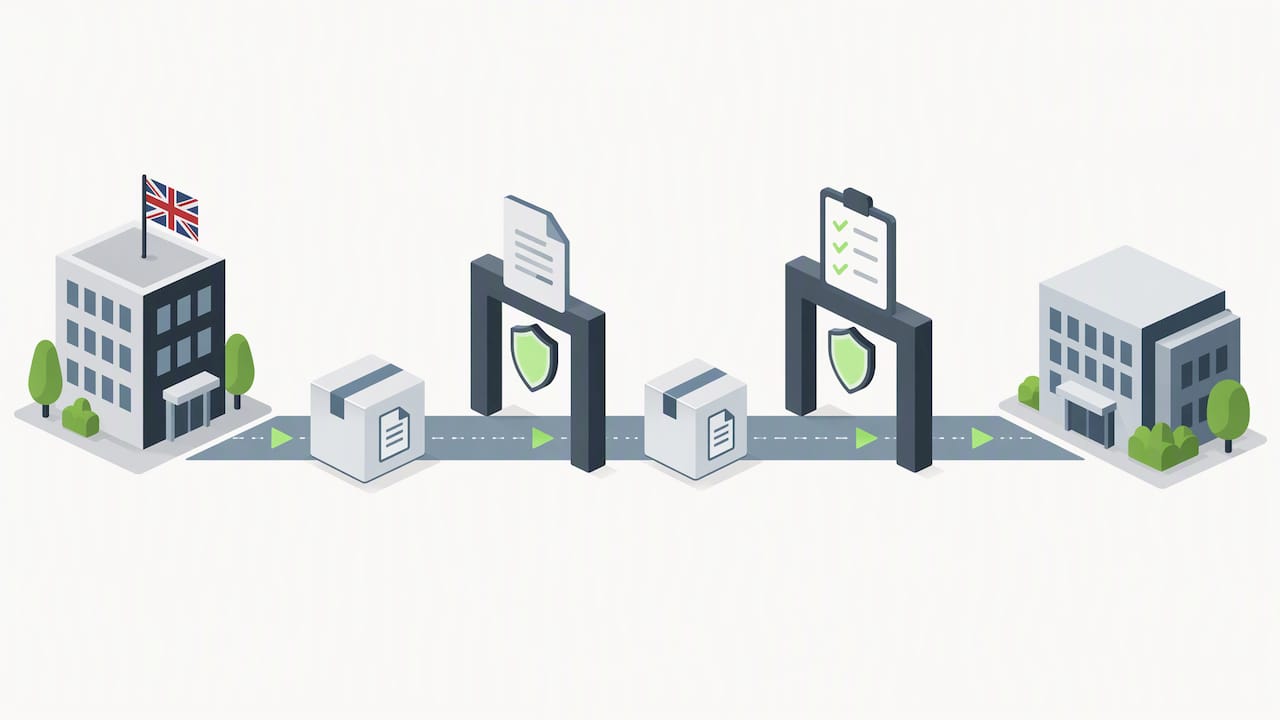
Where a transfer is restricted, the ICO sets out two main contractual safeguards: the International Data Transfer Agreement (IDTA) and the UK Addendum to the EU SCCs. The Addendum is useful where a partner already has EU Standard Contractual Clauses in place for other work; the IDTA stands alone where no EU relationship exists. Alongside either safeguard, the ICO expects a Transfer Risk Assessment (TRA) that looks at the legal environment, technical protections and practical realities of data handling at the destination.
In practice, three steps keep most businesses on the right side of this:
- Minimise what you send: case reference, outstanding amount, contact details and relevant correspondence, nothing more.
- Carry out and document a TRA before the first case goes overseas, not after a dispute arises.
- Put the safeguard (IDTA or Addendum) and a clear data-processing clause into the partner contract itself, covering retention, deletion and breach reporting.
Pro Tip: Ask any prospective overseas partner to confirm in writing which safeguard they will sign before you share a single case file.
Our guide to GDPR and debt collection walks through this in more detail for UK creditors weighing up overseas partners.
Practical multilingual communication strategies and channels
Translation and localisation are not the same thing. Translation converts words; localisation adapts tone, formality, payment references and even the order in which information appears, to match what a debtor in that market actually expects from a formal letter. A literal translation of a stern British collection letter can land as confusing or even comic in another language, which defeats the purpose entirely.
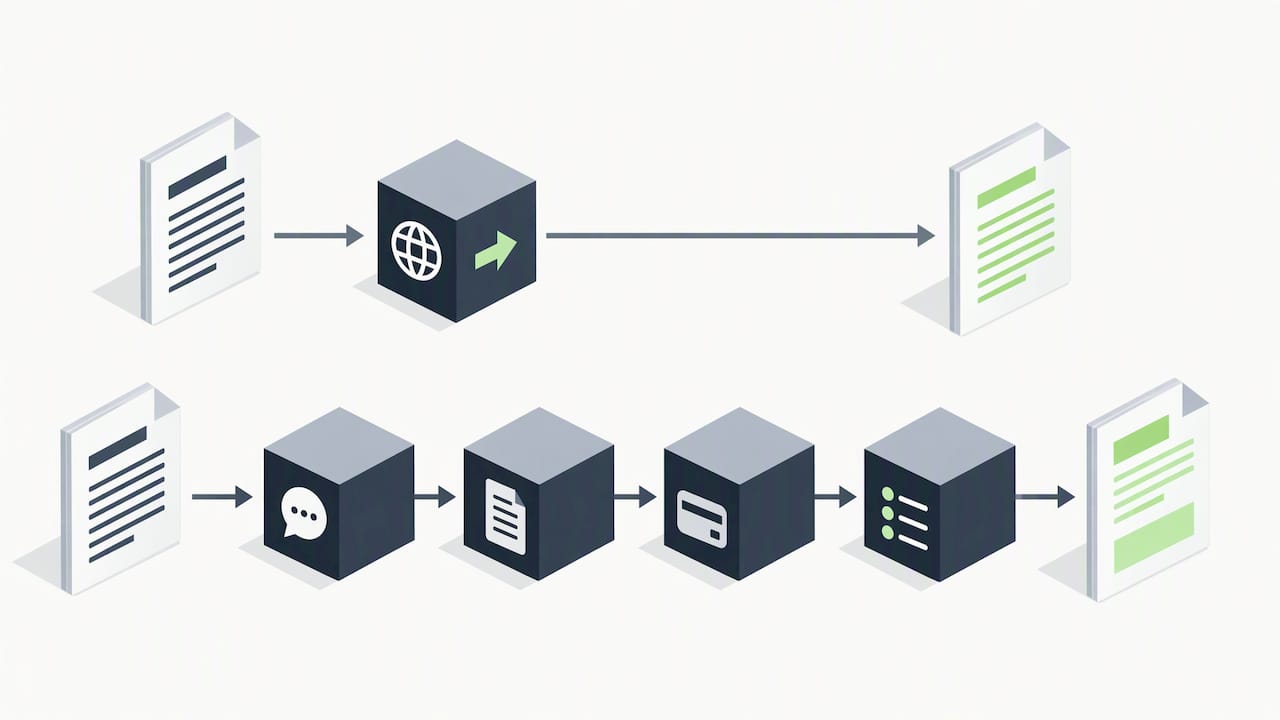
Channel choice should follow local habit rather than UK default. Some markets respond far better to a formal postal letter than to email; others treat a phone call as intrusive unless preceded by written contact. Matching the channel to local norms, not just the language, is often what determines whether a debtor responds at all.
Three ways to handle the language work itself:
- Professional human translators for formal demands, legal notices and anything that might later be relied on in a dispute.
- Bilingual collectors who can negotiate live, read tone and adjust in real time during calls or chat.
- Machine translation, used only for low-stakes routine correspondence and always checked by a native speaker before anything legally sensitive goes out, since best practice treats unreviewed machine output as unsuitable for formal demands.
A typical escalation path moves through distinct tones: an initial contact that is informative and neutral, a reminder that is firmer but still courteous, a negotiation stage that opens room for payment plans, and a final demand that is unambiguous about consequences. Each stage should be translated and localised separately rather than running the same template through a translator once and reusing it throughout.
Pro Tip: Keep one native-speaker reviewer attached to each language pair for the whole case, so tone stays consistent from first contact to final demand.
How to choose and brief a multilingual collection partner
Not every agency that claims “international coverage” has native-level staff in the language you need, so a short vetting process pays for itself quickly. Look for:
- Confirmed native or near-native proficiency in the debtor’s language, not just “someone who speaks some [language]”.
- Demonstrable cultural familiarity with business norms in the debtor’s market.
- A clear, documented approach to UK GDPR restricted transfers, including willingness to sign an IDTA or Addendum.
- An established local enforcement network, in case the case needs to escalate to court action or a local agent.
- Transparent data security practices: encryption, access controls and defined retention periods.
Ask prospective partners directly: which safeguard will you sign for this transfer? What happens to our data if the case closes without payment? Can you show a recent reference for a case in this specific country? How do you escalate when contact attempts fail?
Red flags are usually obvious once you look for them: no written contract, vague answers about data handling, or an approach that leans on pressure tactics rather than negotiation. Any of these should end the conversation.
A good case brief saves time on both sides. Include the debt amount and history, every contact attempt made so far, any payment promises or disputes raised, permitted contact methods, and the point at which you want the case escalated. Our guide to international debt recovery covers the operational steps in more depth.
How we help with multilingual and international cases
We built our matching platform around a simple problem: businesses with an overseas debt rarely know which agency actually has the language coverage, local enforcement network and compliance experience their case needs. Rather than contacting agencies one by one and hoping, we gather the case details upfront, debt type, amount, age and location, and match you to agencies suited to that specific profile.
A detailed intake does two things at once: it removes the guesswork from your side, and it gives the receiving agency enough context to accept and act on the case faster rather than sending back a list of clarifying questions.
Before submitting a case through our platform, it helps to have:
- The original invoice or contract and any amendments.
- A full record of contact attempts and debtor responses to date.
- The debtor’s location and any language preference you already know.
- Any payment promises, part-payments or disputes raised so far.
Technological tools and software for managing multilingual debt collections
Most collection agencies working across languages now rely on a mix of case management software and translation tools rather than handling either in isolation. A case management platform that logs every contact attempt, language used and response received gives you an audit trail that matters both for compliance and for deciding when to escalate.
Managed machine translation, where output is routed through a reviewer rather than sent straight to the debtor, has become common for routine correspondence because it speeds up first-draft translation without removing human oversight on anything sensitive. Pairing this with a translation memory, a stored library of previously approved phrases and legal terms in each language, keeps tone and terminology consistent across a long-running case.
Secure client portals that let debtors view their balance and make payments in their own language currency and interface also reduce friction considerably, since a debtor who can self-serve a payment plan is often easier to recover from than one who has to negotiate every step by phone. Whatever combination of tools a partner uses, the underlying question is the same one that applies to data protection generally: where is the data stored, who can access it, and does that match the safeguards agreed in the contract.
Common challenges and solutions in multilingual debt collection processes
The most frequent problem is not language itself but inconsistency: a case handled by three different people in three different tones, with no single reviewer tracking what has already been said. The fix is a named case owner per language pair, responsible for tone and continuity from first contact through to resolution or escalation.
A second recurring issue is treating machine translation as good enough for legally sensitive communication. It usually is not, and a formal demand or legal notice that reads awkwardly in the local language can undermine the credibility of the whole process. Routing anything formal through a human native-speaker reviewer avoids this.
Data protection is the third common stumbling block; understanding whether and how your company can legitimately cover these costs is essential and explained well in Can my UK limited company pay my personal expenses? Businesses often discover only after a case has gone overseas that they never confirmed a safeguard with the receiving agency, which can mean redoing the compliance work retrospectively. Agreeing the IDTA or Addendum and completing a Transfer Risk Assessment before the case leaves the country removes this risk entirely.
Finally, cultural mismatch in negotiation style causes more stalled cases than outright refusal to pay. A direct, time-pressured tone that works in one market can read as disrespectful in another, closing down negotiation rather than opening it. Briefing partners on expected local tone, not just language, solves this more reliably than translation alone ever can.
Author perspective: balancing recovery and commercial relationships
My view, after looking closely at how multilingual recovery actually plays out, is that too many businesses jump straight to formal enforcement when a well-briefed, native-language conversation would have worked just as well and preserved the relationship. Amicable multilingual contact should be the default first move wherever there is any realistic prospect of ongoing trade with the debtor.
Escalation to legal enforcement or a local agent makes sense once contact has genuinely failed, not simply gone quiet for a week. The practical lesson worth holding onto: a debtor who has been approached respectfully, in their own language, is far more likely to negotiate than one who receives a translated threat on day one.
— Jack
How we can help you find the right partner
If you are sitting on an overseas invoice and unsure which agency actually has the language coverage and compliance experience to handle it, starting with a detailed case submission saves a lot of back-and-forth. We ask for the debt type, amount, age and debtor location upfront, then match you to agencies suited to that specific profile rather than leaving you to contact providers blind.

This is a curated match, not a guarantee of recovery: every overseas case carries its own risks around contact, enforcement and timing. What we can offer is a faster route to a partner who already has the right language skills and a documented approach to UK GDPR transfers. Start with our Business Debt Recovery page if the debt is commercial, or look at International Debt Recovery for cases that specifically involve an overseas debtor.
FAQ
Can I ignore a debt collection agency contacting me?
Ignoring a legitimate debt collection agency rarely makes the debt disappear and can lead to further action, including court proceedings in some cases. It is generally better to respond, even to dispute the debt formally, than to stay silent.
What are the 11 words to stop a debt collector?
This refers to a popular but misleading claim that a specific short phrase legally halts all collection activity; no such fixed wording carries that effect under UK law. The correct approach is to formally dispute the debt in writing or seek advice from a debt charity or solicitor if you believe the debt is not valid.
Can I be chased for a debt that is many years old?
Whether an old debt is still enforceable depends on limitation rules and whether any payment or written acknowledgement has reset the clock in the meantime. Rules vary by debt type and nation within the UK, so it is worth checking the specific limitation period that applies before assuming a debt has expired.
Is sharing debtor data with an overseas agency always a restricted transfer under UK GDPR?
It typically is, when UK GDPR applies, the receiving agency is outside the UK, and that agency is a separate legal entity, which is the three-part test set out by the ICO. Where all three apply, you need an appropriate safeguard such as an IDTA or Addendum before sharing the data.
How does DebtCollect.org match businesses with multilingual partners?
We collect debt type, amount, age and location details upfront, then match the case to vetted agencies with the language coverage and compliance experience suited to that profile. This replaces contacting agencies one by one with a single detailed intake that speeds up acceptance on the other end.
Authoritative sources for legal and practical reference
- Official ICO rules on what counts as a restricted international transfer.
- Approved safeguards (IDTA and Addendum) for overseas data sharing.
- Legal analysis comparing UK and EU transfer approaches.