


Soft debt collection is the firm but courteous first stage of chasing an overdue invoice: reminders, phone calls, a clear written demand and a payment plan if one is needed, all before solicitors, agents or the court get involved. It works best when it is short, documented and backed by a clear next step. Done well, it recovers most late payments and keeps the customer. Done badly, it costs you statutory rights, breaks data rules or simply lets the debt age.
This guide is for UK businesses and landlords chasing other businesses (and, where relevant, individuals). It sets out what soft collection should look like, the legal points that catch people out, and when to stop being soft.
TL;DR
- Soft collection means early, polite, documented contact. It is not a licence to chase indefinitely: set a timetable and a point where you escalate.
- Tell a business debtor in writing that you will claim statutory interest and fixed recovery costs. Staying silent about it can cost you the right to claim.
- If the debtor is an individual or sole trader, the Pre-Action Protocol for Debt Claims shapes what your letters must say before you can issue a claim.
- Keep messages compliant: consent, opt-outs and data minimisation matter, and the ICO has fined firms for spam texts in this area.
- If two or three polite attempts fail, move to a formal letter or a matched collection agency rather than sending a fourth reminder.
Table of Contents
- What soft debt collection actually means
- A sensible timetable for the soft stage
- The trap: being soft without protecting your rights
- If the debtor is an individual or sole trader
- Write the message so it gets paid
- When the debtor says there is a problem
- Contact methods, consent and keeping on the right side of the rules
- Where our experience points
- When to hand it on
- How we can help
- FAQ
- Sources
What soft debt collection actually means
The phrase covers everything you do before the dispute turns adversarial. Typically that is:
- a friendly reminder on or just after the due date;
- a phone call to find out why the invoice has not been paid;
- a second, firmer written reminder that mentions interest and costs;
- an offer of a short, written payment arrangement;
- a final letter before formal action.
You will also see the same approach described as amicable collection: trying to settle the matter by agreement. The aim is payment, not punishment. Most late payers are not refusing to pay. They have a cash-flow gap, a missing purchase order number, an invoice sent to the wrong person, or a genuine query about the work.
The opposite, hard collection, is where a third party or a court takes over: a formal letter of claim, a county court claim, enforcement. Soft collection is what you do first, and it should always run alongside a plan for what hard collection looks like if it fails. Our debt collection checklist for UK businesses lays out that whole sequence step by step.
A sensible timetable for the soft stage
There is no legal minimum length for the soft stage, but there is a practical maximum. The longer a debt ages, the harder it is to recover, and every week of polite silence from you tells the debtor you can wait. A workable pattern for a typical B2B invoice on 30-day terms:
| When | Action | Tone |
|---|---|---|
| 1 to 3 days before due date | Courtesy reminder with invoice copy | Helpful |
| Day 1 to 3 overdue | Email, then a phone call to the person who approves payment | Friendly, curious |
| Day 7 to 10 overdue | Written reminder citing the due date, the amount and your terms | Firm and polite |
| Day 14 to 21 overdue | Formal letter stating statutory interest and fixed costs will be claimed | Business-like |
| Day 28 to 30 overdue | Final demand with a deadline and the named next step | Direct |
Treat those day counts as a starting point to adapt to your own terms and customer, not a rule. Our guide to UK debt collection timelines covers when escalation makes sense for different debt ages.
The trap: being soft without protecting your rights
The most expensive mistake in soft collection is quiet generosity. Creditors send friendly nudges for months, never mention interest, and then find the position murkier than they assumed.
Under the Late Payment of Commercial Debts (Interest) Act 1998, a business supplier can claim statutory interest, which is 8% plus the Bank of England base rate, unless your contract sets a different rate. Official guidance on the debt side notes that failing to tell a business debtor you intend to claim it may forfeit the right to recover it. The sensible habit is to state in your terms, on your invoices and in your second reminder that you will charge statutory interest and recovery costs on late payment.
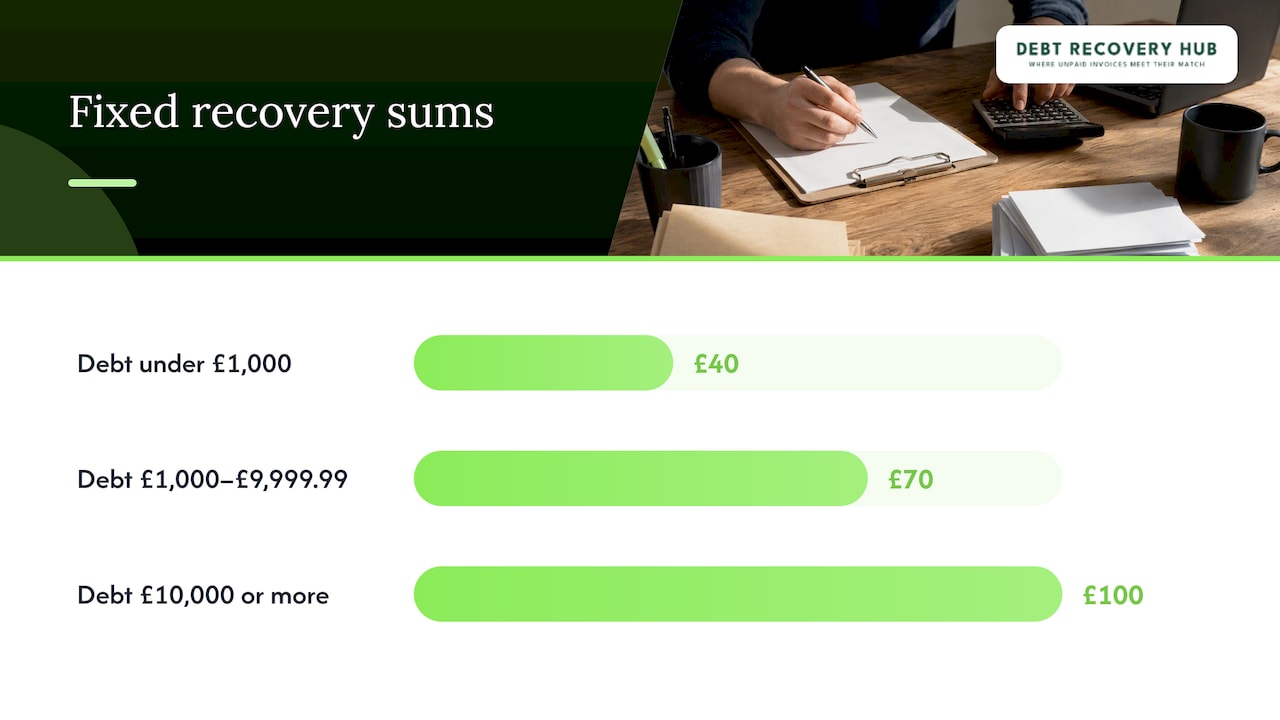
On top of interest, once statutory interest begins to run you are entitled to a fixed sum for recovery costs. The amounts, per GOV.UK, are:
| Size of unpaid debt | Fixed sum you can claim |
|---|---|
| Under £1,000 | £40 |
| £1,000 to £9,999.99 | £70 |
| £10,000 or more | £100 |
Reasonable costs above those sums may be claimed if you can substantiate them. For a fuller picture of what a recovery really costs, see our piece on UK debt recovery costs and our guide to late payment compensation. The mechanics of interest are covered in our supplier’s guide to the Late Payment Act.
A caution on scope: these rules apply to business-to-business contracts. They are not a route to add interest to a consumer’s bill, and individuals and sole traders as debtors bring the protocol below into play.
If the debtor is an individual or sole trader
When a business claims money from an individual, including a sole trader, the Pre-Action Protocol for Debt Claims applies. It expects you to send a letter of claim with specified information before starting court proceedings, to allow the debtor a reply period (normally 30 days), and to consider alternative dispute resolution if the debt is disputed. The wider Practice Direction on pre-action conduct explains that courts expect parties to follow these steps and can take non-compliance into account on costs.
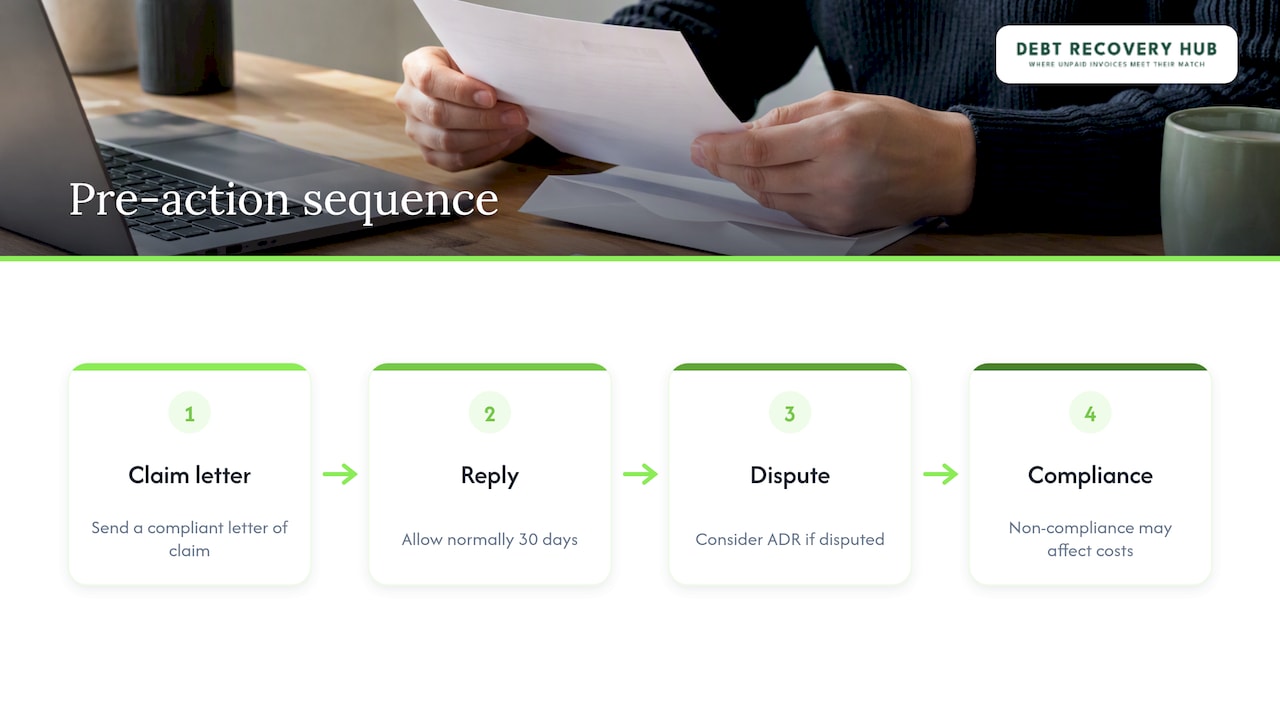
So your soft stage is not separate from the legal process. Good soft collection produces the paper trail that proves you tried to resolve things. Keep copies of every message, note every call with date and outcome, and make sure your formal letter is compliant. Our pre-action protocol guide and letter templates that meet the protocol show what that looks like in practice.
Write the message so it gets paid
A soft reminder is not a weak one. Compare:
“Just checking in on this when you get a moment.”
with
“Invoice 1042 for £2,400 was due on 3 September. Could you confirm today whether it is approved and the date payment will reach us? Our terms allow us to charge statutory interest on late payment.”
The second gives the invoice number, the amount, the date, one clear question and a quiet reference to your rights. Each reminder should include:
- the invoice number, amount and original due date;
- a copy of the invoice and your bank details;
- one specific request (payment date or the reason for delay);
- a reply deadline;
- the named contact who can resolve it.
Address it to the person who authorises payment, usually in accounts payable or the finance director, not just the person who ordered the work.
When the debtor says there is a problem
Many of the “unpaid” invoices you chase are actually disputed. If the answer is that the price is wrong or the work was not as agreed, treat that differently from non-payment.
- Ask for the dispute in writing, with the specific line or amount that is contested.
- Pay attention to the undisputed part. If only £400 of a £3,000 invoice is queried, ask for payment of the remaining £2,600 now. Our guide to a part-paid invoice explains how to keep the balance moving.
- Check your contract. A dispute resolution clause may require negotiation or mediation before litigation. Following it protects you; ignoring it can weaken your position and add cost.
- Offer a conversation, not an ultimatum, and put any agreed settlement in writing before accepting a reduced payment.
Where the debtor simply goes silent, see our note on invoice ghosting.
Contact methods, consent and keeping on the right side of the rules
Email and phone are the usual tools. Automated texts and bulk messaging are tempting because they scale, but they are where soft collection turns into a regulatory problem. The ICO fined two companies a total of £150,000 after sending unwanted spam texts offering financial debt services. That case concerned marketing messages, not routine invoice reminders, but the lesson carries over: do not send high-volume, untargeted messages, always include a clear way to opt out where rules require it, and be able to show where your contact data came from.
Practical habits:
- Keep to sensible hours and a sensible frequency. Repeated calls in a day to the same switchboard look like harassment, not diligence.
- Use business contacts you already hold through the contract rather than buying lists.
- Check the number you are about to use is genuine before you automate anything. If you run outbound calls, it helps to know how verifying a UK business number on WhatsApp affects whether your calls and messages actually reach the debtor.
- Never threaten action you will not take, and never imply you are a court or solicitor when you are not.
Our ethical debt collection compliance guide goes further on tone and conduct.
Data protection in the soft stage
Under UK GDPR you should hold only the data you need. The ICO’s advice on information sharing without consent uses the example of a garage owner passing a customer’s details to a debt collector over unpaid car payments, and explains that you can rely on a lawful basis such as legitimate interests rather than consent. Mention this sharing in your contracts or privacy notice so nobody is surprised. The ICO’s data minimisation guidance also cautions against collecting or keeping information about people who turn out not to be relevant to the debt.
Where our experience points
We see the same pattern again and again in the cases that reach us. The creditor was reasonable, patient and well meaning. Then, four months on, there is no mention of interest in any message, no formal letter, no dated evidence of what was agreed on the phone, and a debtor who has learned that ignoring reminders carries no consequence.
Our view is that soft collection is a stage with an end date, not a style. Set it at the start: how many contacts, over how many weeks, and what happens next. Put the statutory interest wording into your very first reminder so it is never a surprise. And decide early who handles escalation. Many owners wait too long because involving an agency feels hostile, but a professional, regulated approach is usually less damaging to a relationship than months of awkward chasing.
That is why we built our service around matching rather than guessing. The debt type, amount, age and location all change which agency is the right fit, and a mismatch wastes the weeks you can least afford.
— Jack
When to hand it on
Move beyond soft collection when any of these is true:
- two or three documented attempts have produced no payment date;
- promises have been made and broken;
- the debtor has gone silent or is avoiding calls;
- the debt is large relative to your monthly turnover;
- the debtor is overseas, or the case involves property, contract or complex dispute elements;
- limitation or insolvency risk is rising.
The usual next steps are a formal letter before action, a collection agency, or solicitors. Our guide to pre-litigation debt recovery and the notes on pre-action debt recovery explain how to do that without picking up costs penalties.
How we can help
If your soft reminders have stalled, we match your case with vetted debt collection agencies according to the type, size, age and location of the debt. You give us the details once and you do not pay us for the introduction. Depending on your case, start with business debt recovery, or unpaid invoice recovery if it is a single overdue invoice. Prices are set by the agency you are matched with, so we cannot quote one here.
FAQ
Is soft debt collection legally required before court?
Not as a separate stage, but pre-action steps are. If the debtor is an individual or sole trader, the Pre-Action Protocol for Debt Claims expects a compliant letter of claim and a reply period before you issue. Soft collection is how most creditors build the evidence that they tried to resolve things.
How many reminders should I send?
Two or three well-written, dated reminders, plus at least one phone call, is usually enough to tell whether the debtor intends to pay. A fourth or fifth reminder rarely changes the outcome. Move to a formal letter instead.
Can I charge interest if I only sent polite emails?
For business-to-business debts, you may be able to, but only if the right to interest has not been lost. Say clearly in your terms and reminders that you will claim statutory interest and the fixed recovery sum. If your contract has its own rate, that will normally apply instead of the statutory one. Check your position with a solicitor if the amount is large.
What if the customer disputes the price?
Ask for the dispute in writing, separate the contested amount from the undisputed balance and chase the undisputed part. Look at any dispute resolution clause in your contract before you escalate, since it may require negotiation or mediation first.
Sources
- Claim debt recovery costs on late payments, GOV.UK
- Interest on late commercial payments, GOV.UK
- Late Payment of Commercial Debts (Interest) Act 1998, section 5A
- Late Payment of Commercial Debts (Interest) Act 1998, technical manual
- Pre-Action Protocol for Debt Claims, Ministry of Justice
- Practice Direction on pre-action conduct and protocols
- ICO: two companies fined a total of £150k for spam texts
- ICO: information sharing without consent
- ICO: data minimisation